Skip to content
Michi-no-Eki JournalMap
Illustrative image — not an on-site photograph

Shiga Prefecture · Kinki

Roadside Station Makino Ossaka-toge

道の駅 マキノ追坂峠

A Makino rest stop on the Route 161 mountain pass, with Lake Biwa views, soba, saba-zushi (mackerel sushi), and rice flour bread in one place.

Illustrative image — not an on-site photograph

Location
Takashima City
Road
National Route 161
Hours
9:00–18:00
Regular opening hours. Some listings give a 19:00 closing time from April through August; seasonal extended hours may apply.
Parking
Cars: 40 / Large vehicles: 27
My stamp

Record this station in your journal

Records are saved in this browser. Visited stations receive a stamp and count towards your nationwide progress.

Nationwide progress
— / 1,238 stations
How to enjoy

Choose how to enjoy your visit

Eat, shop, play, take in the view or rest. Choose from the station’s strengths to suit your day.

When you arrive
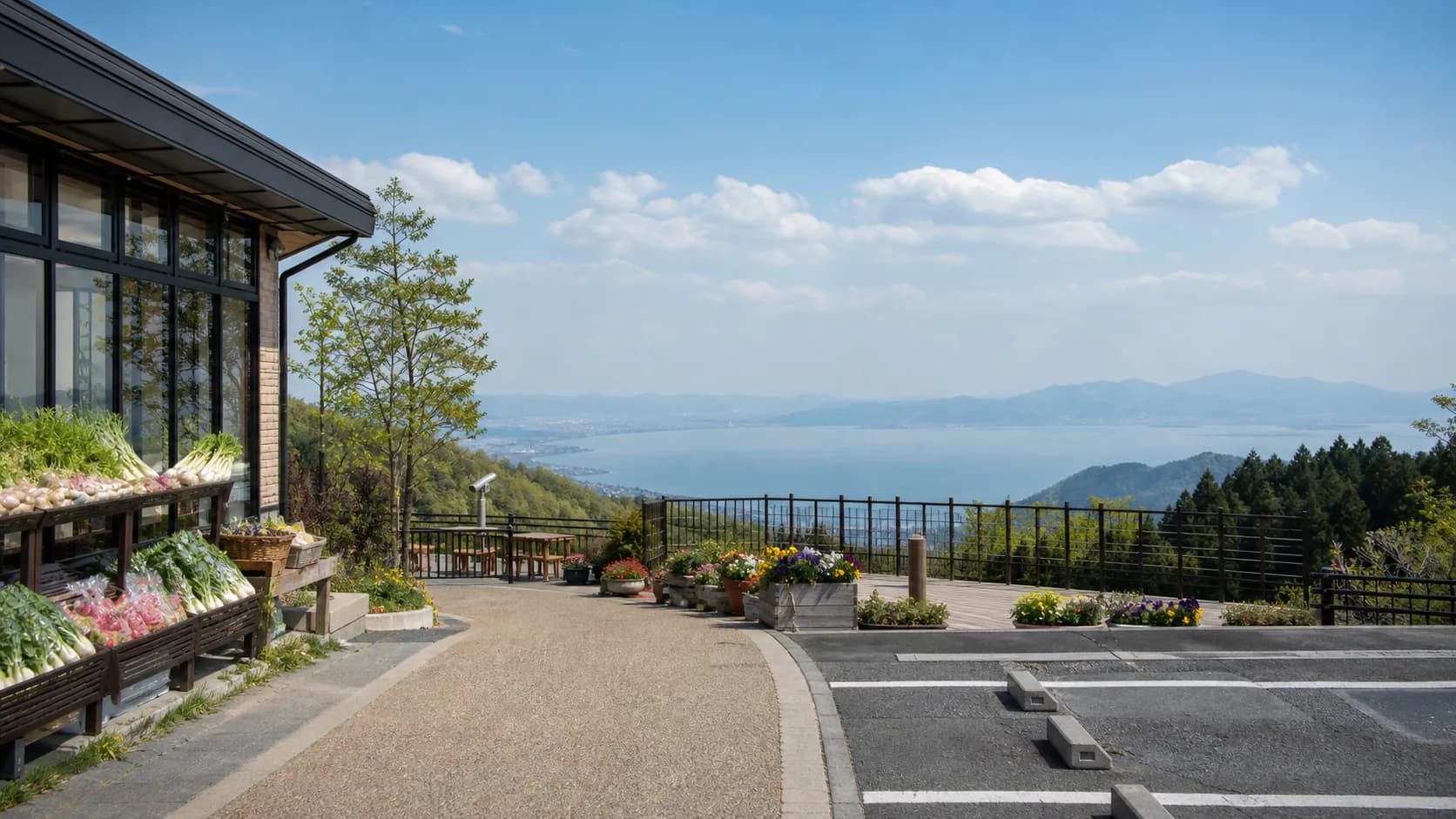
See the Lake Biwa view before going inside

In good weather, start with the view from the terrace or restaurant side. Even under clouds, the mountain pass setting shapes the feel of this stop.

For lunch
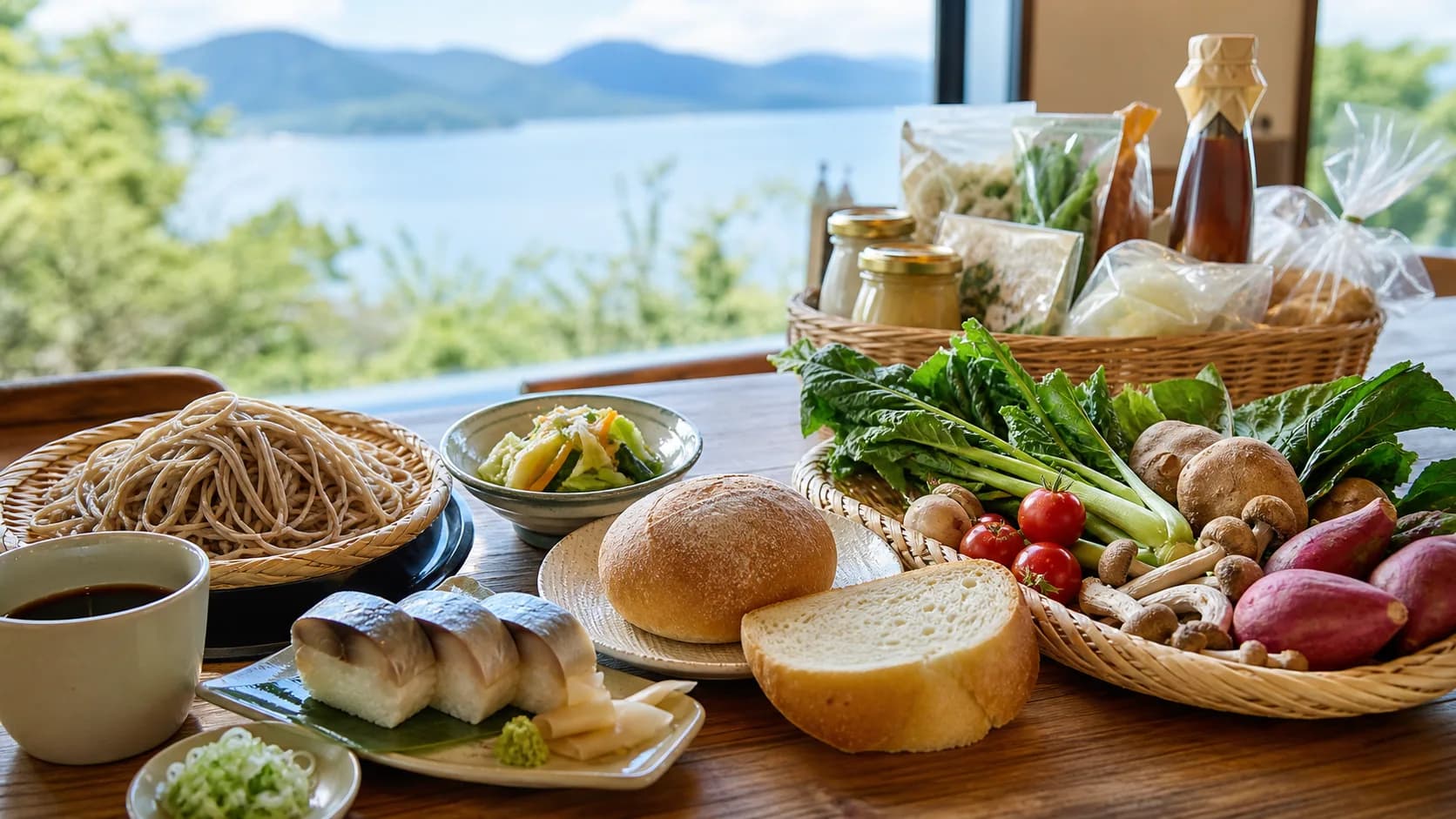
Start with handmade soba and saba-zushi

Soba, saba-zushi (mackerel sushi), and local ingredients are the restaurant mainstays. Closing times can be early, so leave enough time for a late lunch.

To take home
Rice flour bread, vegetables, and processed foods

Bread and farm shop stock vary by time of day and season. You can also pick up a snack before Kaizu Osaki or the avenue.

With children
Take care of toilets and a break first

This is not a destination for large playground equipment. It works well for combining toilets, a meal, and a short breath of fresh air during a long drive.

Seasonal detours
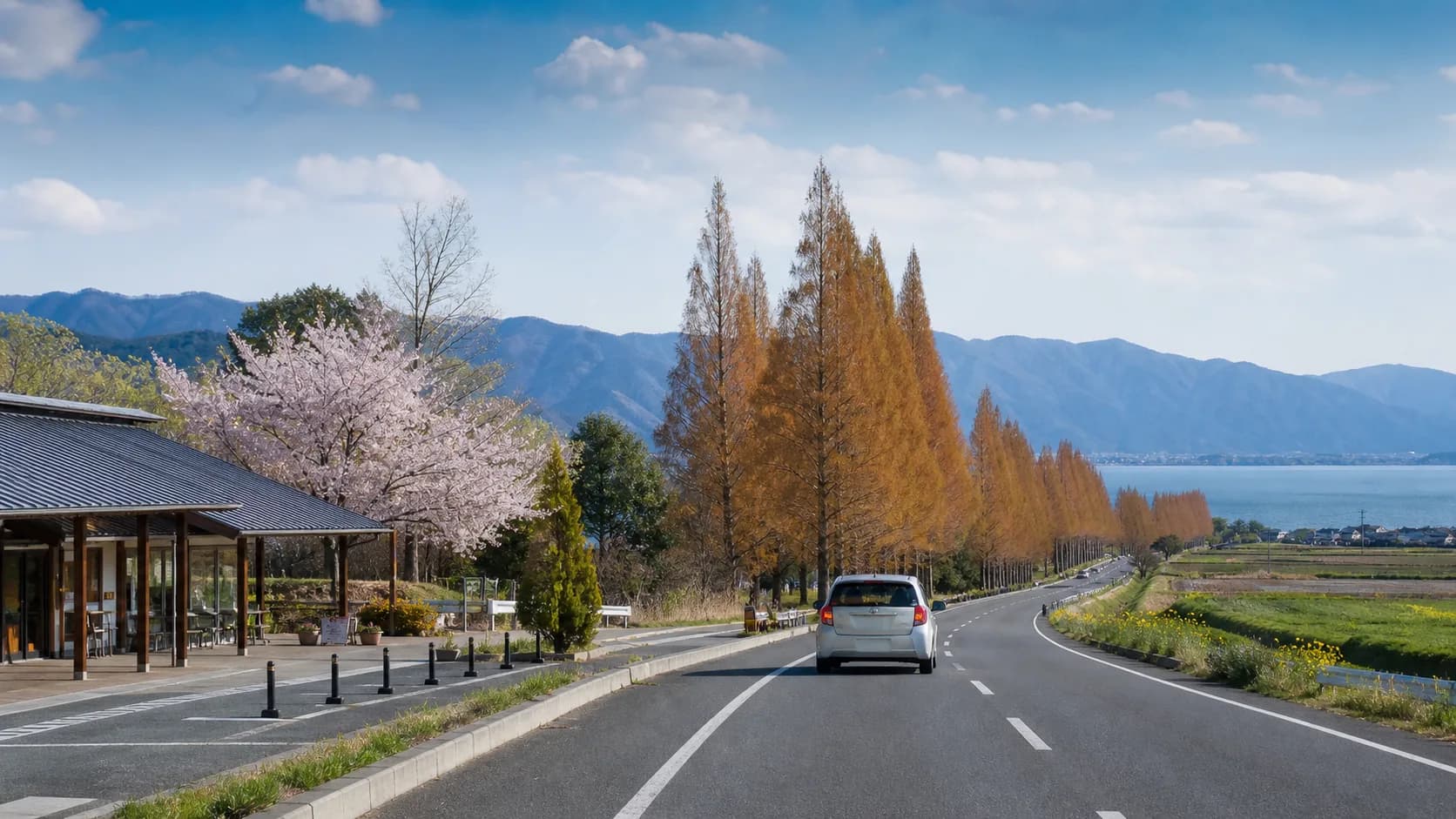
Kaizu Osaki in spring; the avenue in autumn

Nearby roads and parking can become crowded during cherry blossom and autumn foliage seasons, so plan the roadside station as a rest stop.

On rainy or cold days
Focus on food and shopping

When visibility is poor, there is no need to force an outdoor walk. A short stop for soba, saba-zushi, rice flour bread, and the farm shop is enough.

Illustrative image — not an on-site photograph
View first

Here, take in the view before you eat

The appeal of Makino Ossaka-toge lies as much in the order of a visit as in its facilities. Park, look toward Lake Biwa, unwind a little, then choose soba or rice flour bread. That sequence suits a stop before or after exploring Takashima’s natural scenery.

Highlights

Makino Ossaka-toge stands where Lake Biwa suddenly comes into view as you drive south on Route 161 from Fukui. It is not a sprawling roadside station: enjoy handmade soba and saba-zushi (mackerel sushi) at the restaurant with a view, browse vegetables and rice flour bread at the farm shop, and take a breather before or after visiting Kaizu Osaki or the Metasequoia Avenue. Knowing where you can park, use the toilet, and eat makes it easier to decide on a stop with children or on a long drive.

  • #Shiga Prefecture
  • #Takashima City
  • #Makino
  • #National Route 161
  • #Lake Biwa views
  • #Restaurant with a view
  • #Handmade soba
  • #Saba-zushi
  • #Rice flour bread
  • #Farm shop
  • #Kaizu Osaki
  • #Metasequoia Avenue
Why I like it

Reasons to stop here

01

The moment Lake Biwa opens up at the pass

Approaching from the Hokuriku side, the mountain road gives way to a view of Lake Biwa. You can take in the scenery from the viewing terrace or a restaurant window, making this a place to set aside some driving fatigue as well as use the toilet.

02

Plan your meal around soba and saba-zushi

The restaurant focuses on soba made with locally grown buckwheat ground in a stone mill, saba-zushi (mackerel sushi), and dishes using local ingredients. Even if you skip a meal, you can browse rice flour bread, local vegetables, and processed foods, and still get a taste of Makino on a short stop.

03

A useful break before or after Kaizu Osaki, the avenue, and the highlands

When visiting the cherry blossoms at Kaizu Osaki, the Metasequoia Avenue, Makino Pickland, or Makino Kogen, it helps to fit in a toilet and meal stop here. Crowds vary by season, so pausing at the station before moving on makes the next leg easier.

Route idea

Ways to plan your stop

Spend your time at the station or add somewhere nearby. These ideas help you plan around your companions and the weather.

Drives between the Fukui and Tsuruga area and the western shore of Lake Biwa

Turn a long Route 161 drive into a scenic break

Route 161 carries heavy traffic through a stretch where mountain roads give way to lakeshore scenery. Stopping here for toilets, parking, and food can help you set off calmly for Kaizu Osaki or central Takashima.

About 25–30 minutes from Kinomoto Interchange on the Hokuriku Expressway via Routes 8, 303, and 161.

At night or in bad weather, make rest and a check of road conditions your priorities over the view.

Days when you want a quick meal and shopping stop

Soba for lunch, rice flour bread for the road home

You can eat soba and saba-zushi in the restaurant or just pick up something light at the bakery or farm shop. If some companions want a full meal and others a snack, they can choose within the same site.

Parking → view → restaurant or local products shop → bakery, for a short circuit.

Popular items and bread can run low at certain times. Come earlier if you have something specific in mind.

Lakeshore drives during cherry blossom season

In spring, stop before or after Kaizu Osaki

Kaizu Osaki has splendid cherry blossoms, but no dedicated parking area nearby; traffic restrictions and crowds are possible at peak times. Using the roadside station for toilets and food before heading to the shore can ease the trip with children.

Roadside station → Kaizu Osaki area. During blossom season, check the tourism association’s traffic guidance before setting off.

On weekends at peak bloom, consider avoiding a close approach by car. Use information from JR Makino Station and local information centers too.

Photography, fruit picking, and a half-day family drive

In autumn, visit the Metasequoia Avenue and Makino Pickland

The Metasequoia Avenue changes dramatically with the seasons. Next to it, Makino Pickland offers fruit picking and shopping. Add lunch or a break at the roadside station for a fuller half-day trip.

Roadside station → Makino Pickland or Metasequoia Avenue. About 10–15 minutes by car.

During autumn foliage season, avoid stopping or parking on the road and follow parking guidance at Makino Pickland and other designated areas.

Days for swimming, camping, a stop after skiing, or a hot spring bath

In summer, Sunny Beach; in winter, finish at the highland hot spring

In summer, continue to Makino Sunny Beach; in winter or after outdoor activities, head to Makino Kogen Onsen Sarasa, a day-use hot spring. The roadside station is a useful stop for food and toilets before or after getting wet, cold, or tired.

Roadside station → Sunny Beach or Makino Kogen Onsen Sarasa. Check seasonal operating periods and closure days.

Swimming areas, hot springs, and fruit picking can change their seasons and closed days, so rely on each destination’s official information.

Hours

Opening hours

Roadside station
9:00-18:00

The official website gives these as regular hours. Seasonal extensions apply.

April–August guide
9:00-19:00

Listed by the Kinki Roadside Stations Liaison Council and others. Check the latest official notice before leaving.

Restaurant
9:00–17:30 last order, approximate

Listed on the official restaurant page. Hours may vary with the season and operating day.

24-hour toilets and EV charger
Approximately 24 hours

For early-morning or nighttime breaks on a long drive, distinguish these facilities from shop opening hours.

Family

Visiting with children

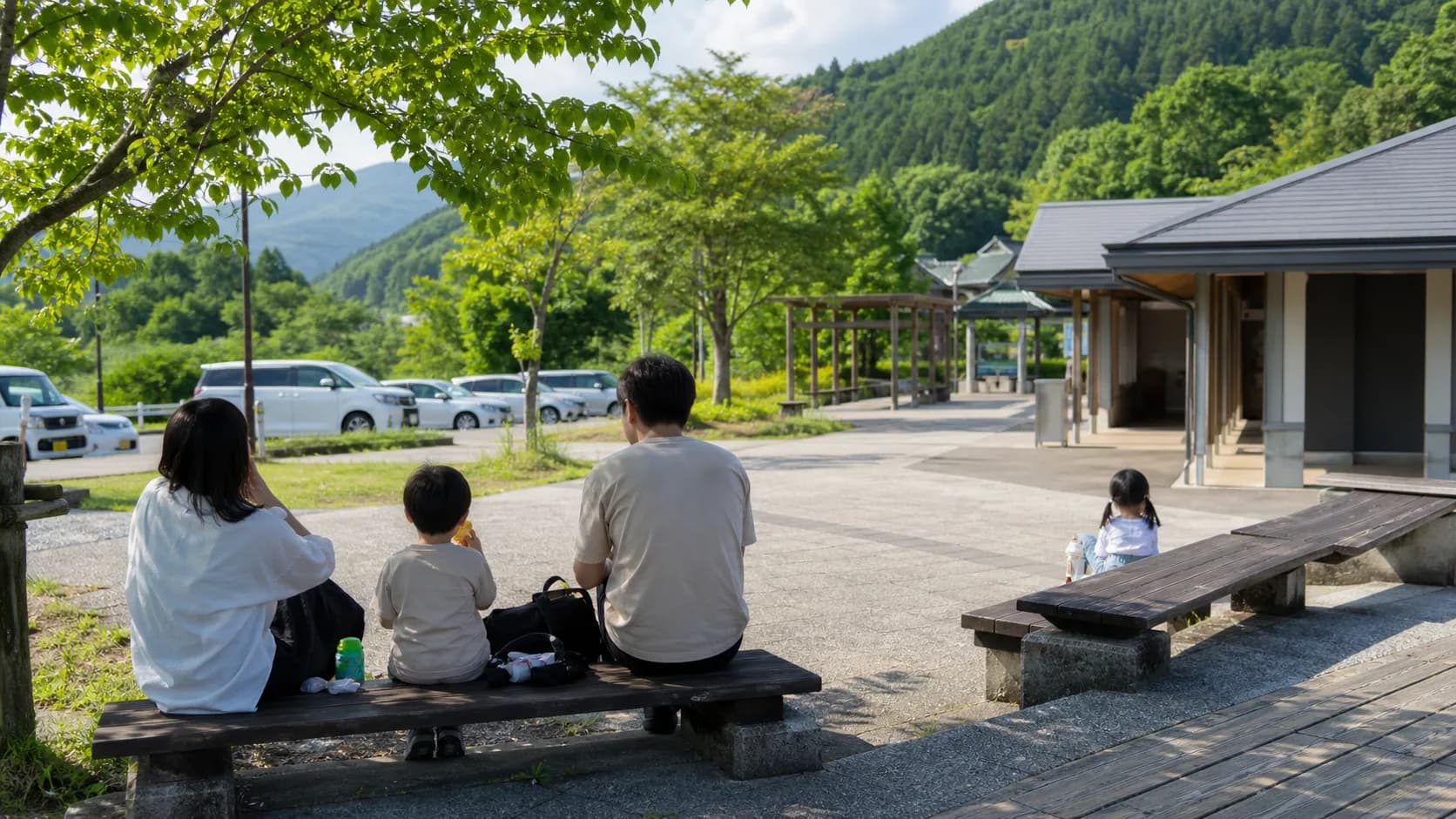
Illustrative image — not an on-site photograph

Stars show the editorial recommendation for each age group on a five-point scale. Read the reasons alongside each rating.

Under 1 year
★★★☆☆

Baby changing tables and baby chairs are listed, making this useful as a rest stop. Come to organize feeding, diaper changes, and mealtimes, rather than for play.

Ages 2–3
★★★☆☆

A little fresh air and bread as a snack work well, but this is not a station with large play equipment for a long stay. Use it as a change of pace during a car trip.

Ages 4–6
★★★★☆

Combine soba, bread, and the view with nearby Kaizu Osaki or Makino Pickland for more to enjoy. If the meal wait is long, look at the view first.

Elementary school age
★★★★☆

The Lake Biwa view, mountain road, Metasequoia Avenue, fruit picking, and hot springs all offer points of interest. Combining the station with nearby places will make a more satisfying visit.

Toilets before eating

Meals and parking can take time during tourist season. Using the toilet first makes the visit easier.

Crowds at nearby attractions

Parking and road conditions are harder to predict during cherry blossom, autumn foliage, and swimming seasons.

Rest

Ideas for a restful stop

  1. 1
    Go from the parking area to the toilets first

    This is a relatively compact station with 40 standard car spaces and 27 large-vehicle spaces. On busy days, visit the toilets before eating or shopping to make the stop more relaxed.

  2. 2
    See the view before eating

    The Lake Biwa view depends on the weather, but it is central to the feel of this station. Step outside before eating to make even a short break memorable.

  3. 3
    Watch the time for a late lunch

    The restaurant is listed with an approximate last order at 17:30. If you return after sightseeing, plan to arrive before it closes.

  4. 4
    In snow or fog, prioritize a safe break

    At a mountain pass, winter or bad weather calls for a safe rest and road information before sightseeing. Check road conditions if heading toward Makino Kogen in winter.

Event

Make an event part of your visit

Permanent spaces and dated events are listed separately. Events can change both the atmosphere and crowds; use the official links for details.

Checking event dates.

Spaces used for events

Outside the local products shop

The outdoor space hosts spring festivals, appreciation events, stalls, and mochi pounding, where steamed rice is pounded into sticky rice cakes.

Restaurant and local products shop

On event days, you can combine a meal, farm shop shopping, and rice flour bread. On busy days, decide on a meal time early.

Official Instagram

Daily notices about opening, products, and events can help you plan a weekend visit.

Tourism association event listings

Events with set dates, such as the pass appreciation festival, are also listed by the tourism association.

Local feel

Reasons to return

Practical ideas and things to consider when spending time here.

The Lake Biwa view from the restaurant stays with visitors

Firsthand accounts and reviews repeatedly mention seeing Lake Biwa from the viewing terrace or restaurant. Rather than stopping only to eat or shop, look at the view when you arrive to appreciate this station’s setting.

Soba and saba-zushi for a meal; rice flour bread for a snack

Several guides highlight locally grown buckwheat soba, saba-zushi, and rice flour bread. When appetites differ in your group, the restaurant and bakery offer ways to make the break lighter or more substantial.

Toilets and parking make this a valuable stop on Route 161

Reviews describe it as a break between drives to or from the Hokuriku area, including tiring single-lane stretches. Even without seeking the view, a stop here can divide up the drive.

In blossom and foliage seasons, plan the route beyond the station

Crowds and parking concerns grow at Kaizu Osaki in spring and the Metasequoia Avenue in autumn. A stop at the roadside station just before or after either destination helps cover toilets, food, and snacks.

With children, use a short stop to reset the mood of the trip

This station is not a destination for a large playground, but it brings together toilets, baby facilities, meals, and bread for snacks. A short spell outside can help tired children before the next stop at the avenue or beach.

Before your visit

Things to check before setting out

Opening and closure days, individual businesses and facilities for children or dogs can affect your plans.

  • Regular opening hours are 9:00–18:00. Some listings give a 19:00 closing time from April through August; seasonal extensions apply.
  • The usual closed day is Tuesday, but opening on public holidays and during busy periods is advertised. There is also a New Year closure; check the official website or social media before leaving.
  • Parking is listed as 40 standard car spaces, 27 large-vehicle spaces, and two spaces for disabled visitors. Allow extra time during cherry blossom and foliage seasons, including for crowds at nearby attractions.
  • The facilities list 12 men’s toilet fixtures, seven women’s toilet fixtures, baby changing tables and chairs, and a wheelchair-accessible toilet.
  • Kaizu Osaki has no dedicated parking area during blossom season, when traffic restrictions and crowds are common. Plan to use the roadside station for toilets and food before going there.
  • The Metasequoia Avenue is also a road used by local residents. Avoid stopping or parking on the road or taking photos in the roadway; follow parking guidance at Makino Pickland and elsewhere.
  • In winter, check road conditions on the pass, toward Makino Kogen, and on the way back from skiing or hot springs. Prioritize a safe rest over the view.
Food

Eating and shopping

Specialities, places to eat, sweets and bakeries can all give you a reason to stop. Check individual menus for current prices and availability.

  • Restaurant
    Handmade soba
    According to the shop menu
  • Restaurant and shop
    Saba-zushi (mackerel sushi)
    According to the shop menu
  • Restaurant
    Soba and saba-zushi set
    According to the shop menu
  • Satoyama Bakery (里山パン工房)
    Rice flour bread
    According to the shop menu
  • Local products sales corner
    Local vegetables and shiitake mushrooms
    Depends on stock
  • Light meals and snacks
    Rice flour soft serve and seasonal sweets
    Depends on availability
Food mood

What would you like to eat?

A meal, a sweet treat, market shopping or something to take away: choose a focus for the day instead of trying everything at once.

Illustrative image — not an on-site photograph
A full meal

Handmade soba / saba-zushi

The main lunch choice when you want to eat with a view of the pass. The station advertises soba made with locally grown buckwheat ground in a stone mill; pairing it with saba-zushi (mackerel sushi) is characteristic of this stop.

Allow for a wait at lunchtime or during the tourist season, and avoid arriving just before closing.

A light purchase

Rice flour bread / savory rolls

Even without sitting down in the restaurant, you can take home rice flour bread made with local rice or germinated brown rice. It also makes a convenient snack for children.

The bread selection varies with baking times and sellouts.

To enjoy at home

Local vegetables / shiitake mushrooms / processed foods

Use the farm shop for dinner ingredients as well as souvenirs. Seasonal vegetables and processed foods let you bring a little of the trip home.

Farm shop stock changes with weather, season, and delivery time.

Something sweet

Rice flour soft serve / seasonal sweets

On a short break, the view and a sweet treat may be enough. The official social media account sometimes posts seasonal products and daily updates.

Check the shop’s same-day notices for availability.

Before nearby sightseeing

Drinks / snacks / souvenirs

Picking up car snacks and drinks before Kaizu Osaki or the avenue is reassuring, especially during cherry blossom or autumn foliage crowds.

Parking and shop access at nearby attractions may be restricted at certain times.

Share

Send your travel companions a possible stop.

Send a correction

Let us know if information on this page, such as hours or closing days, is incorrect. Our editors will review your message before updating the guide.

We use your submission only to review and improve our content and to reply about your message.