Skip to content
Michi-no-Eki JournalMap
Illustrative image — not an on-site photograph

Miyazaki Prefecture · Kyushu

Michi-no-Eki Sakatani

道の駅 酒谷

Buy mugwort kusa-dango, then venture a little farther to the terraced fields and waterfall from this thatched-roof mountain road station.

Illustrative image — not an on-site photograph

Location
Nichinan City
Road
National Route 222
Hours
8:30–17:00
The official station website currently lists reduced hours. Prefectural and tourism association listings also show closing at 18:00 from April through September; check the station's official notice if arriving in the evening.
Parking
Cars: 63 car spaces / Large vehicles: 3 large-vehicle spaces
My stamp

Record this station in your journal

Records are saved in this browser. Visited stations receive a stamp and count towards your nationwide progress.

Nationwide progress
— / 1,238 stations
How to enjoy

Choose how to enjoy your visit

Eat, shop, play, take in the view or rest. Choose from the station’s strengths to suit your day.

Buy first
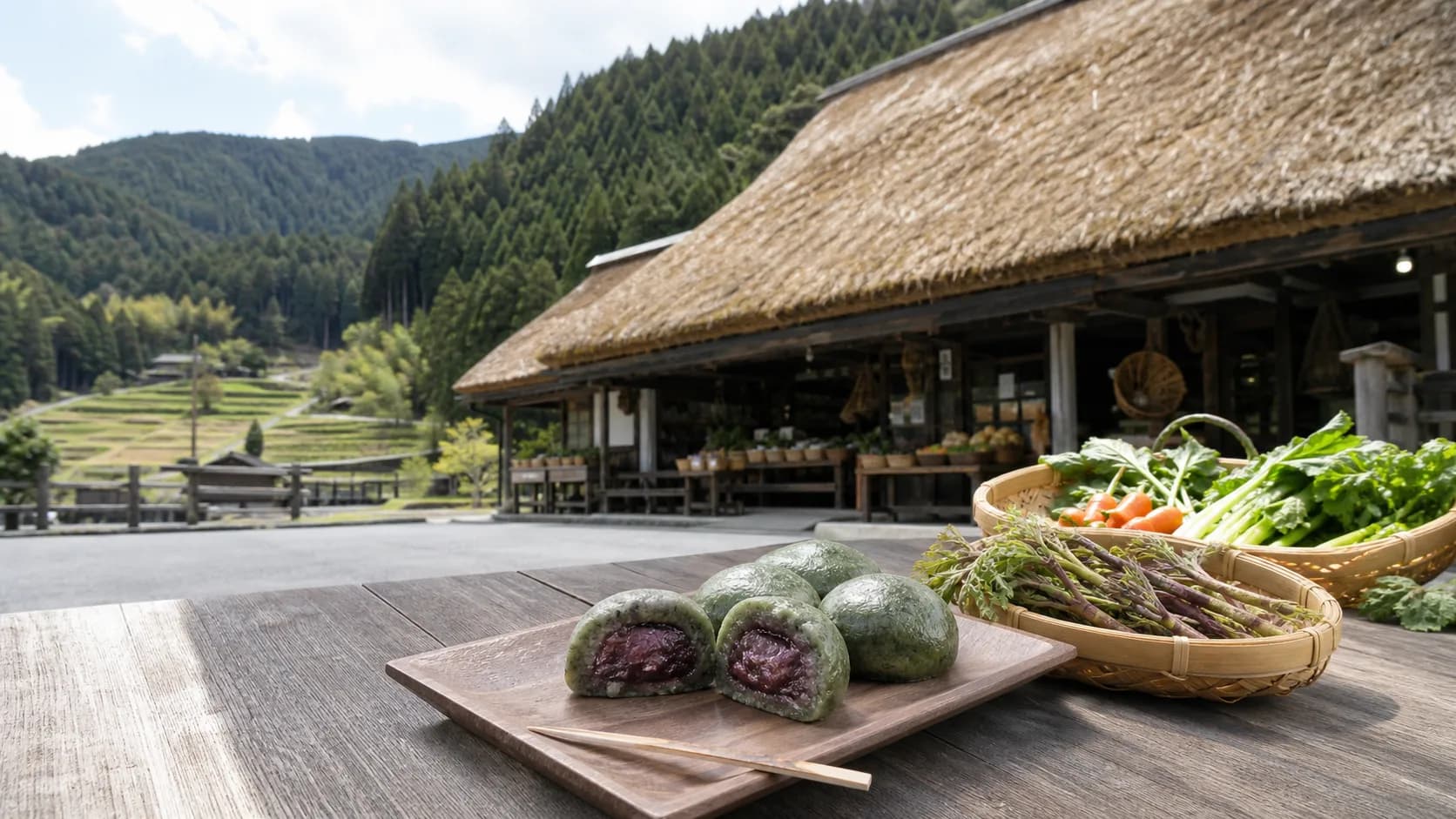
Kusa-dango

A same-day specialty; go early because it may sell out in the afternoon or on weekends.

For lunch
Terraced-field soba at Seseragi no Sato

Plan around the dining room's short lunchtime service.

With children
Toilets, shop and playground

A sequence that lets children move a little during the mountain drive.

In fine weather
Sakamoto Rice Terraces or Obuse Falls

Add one nearby stop to see Sakatani's natural setting.

For the season
Cherry blossoms, hydrangeas and autumn rice terraces

Check official and tourism updates shortly before you go for flowering times and events.

Illustrative image — not an on-site photograph
Haruka's detour notes

With the family, choose the kusa-dango first, then decide on an outdoor stop.

Haruka Tsukioka sees Sakatani as a place to reset during a family mountain drive: toilets after parking, kusa-dango at the shop, and terraced-field soba if it is lunchtime. If children need to move, use the playground; if the weather and energy allow, add either Sakamoto Rice Terraces or Obuse Falls. Eating, shopping and playing in that order makes the station's compact size useful.

1

Buy first

Kusa-dango are best eaten that day. Look for them before they sell out so you can plan the rest of the stop.

2

Lunch is brief

Aim for 11:00–14:00 for terraced-field soba; if you miss it, try the cafe or shop.

3

Keep outdoor play brief

Choose one of the playground, terraces, falls or waterside based on weather and footwear.

4

Follow the seasons

Cherry blossoms, hydrangeas and autumn rice terraces each give a different reason to stop.

Highlights

Michi-no-Eki Sakatani is a mountain roadside stop marked by a thatched roof on National Route 222 between central Nichinan and the Miyakonojo area. Its specialties are handmade kusa-dango, sweet rice dumplings flavored with locally grown mugwort, and terraced-field soba at the Seseragi no Sato dining room. Rather than plan a long stay, combine a short toilet, shop, meal and playground break with one nearby stop: Sakamoto Rice Terraces, Obuse Falls, Sakatani Campground or Nichinan Dam.

  • #Mugwort kusa-dango
  • #Terraced-field soba
  • #Thatched roof
  • #Sakamoto Rice Terraces
  • #Sakatani Sakura Road
  • #Obuse Falls
  • #National Route 222
Why I like it

Reasons to stop here

01

The kusa-dango are the clearest reason to stop in Sakatani

Start at the shop for kusa-dango made with Sakatani-grown mugwort. They contain no preservatives or artificial coloring, and their use-by date is the day they are made, so plan to eat them that day. They can sell out on weekends or by the afternoon; choose them early if you find them.

02

Have terraced-field soba for lunch, or a lighter break at saka-michi cafe

The Seseragi no Sato dining room generally serves from 11:00 to 14:00, with 100% buckwheat terraced-field soba and seasonal dishes. If you miss the dining hours, the shop's dumplings, soft-serve ice cream and drip coffee offer lighter options to suit the family's appetite.

03

Toilets and a playground make a useful break on the mountain drive

Coming up National Route 222 from central Nichinan, you reach the station beyond Nichinan Dam's lake. Children may have been sitting for a long stretch, so a short sequence of toilets, shop and playground helps. In rain, focus on shopping and food rather than extending the outdoor walk.

04

Add the rice terraces, waterfall or campground for Sakatani scenery

Pair the station with just one of Sakamoto Rice Terraces, Obuse Falls, Sakatani Campground or Nichinan Dam to see the area's mountains, water and farming. Spring cherry blossoms, June hydrangeas and autumn terraces change which detour is most appealing.

Route idea

Ways to plan your stop

Spend your time at the station or add somewhere nearby. These ideas help you plan around your companions and the weather.

While traveling between central Nichinan and the Miyakonojo area

A 30-minute kusa-dango and toilet stop

After parking, use the toilets first, then look for kusa-dango and seasonal vegetables in the shop. Even without a full meal, taking home one pack of the local dumplings makes a memorable Sakatani stop.

Parking → toilets → local products shop → depart

Kusa-dango are best eaten that day and can sell out on weekends or by afternoon. Go earlier if they are your main reason for visiting.

A mountain drive passing through between 11:00 and 14:00

Time lunch for terraced-field soba

Around midday, make the Seseragi no Sato dining room the main stop. Consider terraced-field soba, seasonal side dishes, chirashi sushi or inari sushi, then visit the shop or cafe after eating.

Dining room → shop → playground → back to the car

Dining hours are short. If you arrive late, leave room to switch to sweets from the shop or a cafe break.

A stop with toddlers or primary-school children

Give children a brief break at the station

When children tire of the mountain road, use the toilets first, choose a small treat in the shop, and let them move at the playground if the weather allows. It works best as a short reset before the next drive, rather than an all-day play destination.

Toilets → kusa-dango or soft-serve → playground

In rain or intense heat, shorten outdoor play and focus on the dining room and shop.

The spring terrace festival or golden autumn fields

See the seasonal view at Sakamoto Rice Terraces

After eating and shopping at the station, head to Sakamoto Rice Terraces to connect local food with its farming landscape. Narrow roads, parking and ongoing farm work call for a quiet, unhurried short visit rather than a rushed photo stop.

Station → Sakamoto Rice Terraces → central Nichinan or the Miyakonojo area

The best viewing period and events change each year. Respect access limits around farmland.

A day for a little more water and nature

In summer, add the campground, falls or hydrangea road

On a hot, fine day, consider Sakatani Campground or Obuse Falls; in the rainy season, consider the hydrangea road. With young children, assess footing and waterside safety, using the station for toilets and shopping before adding only one manageable stop.

Station → Sakatani Campground or Obuse Falls → return journey

Footing by the falls and water changes with the weather. Avoid going after heavy rain or after dark.

Hours

Opening hours

Local products shop
8:30〜17:00

The official website currently lists reduced hours. Prefectural and tourism association listings also show closing at 18:00 from April through September. Times shown are a guide.

Seseragi no Sato dining room
11:00〜14:00

Follow the official dining page. A prefectural listing also gives 11:00–16:00. Times shown are a guide.

Closed day
January 1

A shortened schedule has been announced for December 31; check shortly before the year-end holidays.

Nearby attractions
Varies by facility and season

Conditions vary for the campground, falls, rice-terrace events and hydrangeas.

Family

Visiting with children

Illustrative image — not an on-site photograph

Stars show the editorial recommendation for each age group on a five-point scale. Read the reasons alongside each rating.

Under 1
★★★☆☆

Useful for toilets and a short shop stop.

As a break on the mountain road, head straight to the toilets and indoor shop after parking. Keep outdoor play brief according to the weather.

Ages 2–3
★★★★☆

The playground offers a chance to move.

Instead of a long dining-room sit, have kusa-dango or soft-serve, let children play briefly, then return to the car.

Ages 4–6
★★★★☆

Easy to combine the playground and dumplings with a short rice-terrace or waterfall detour.

On a fine day, add either Sakamoto Rice Terraces or Obuse Falls. Check footing by the falls and water, and keep plans manageable.

Primary-school children
★★★★☆

The terraces, dam, falls and campground can make learning stops.

Talk about the mugwort in the dumplings, terraced-field soba and the stonework at Sakamoto Rice Terraces to connect food with the landscape. Wear shoes suitable for walking.

Toilets first

Rest stops are limited around the mountain stretch of National Route 222, so use the toilets when you arrive.

Keep outdoor play short

Use the playground for a quick break, then adjust for heat, rain or plans by the water.

If you miss lunch, try sweets

Outside dining hours, switch to kusa-dango, soft-serve or coffee.

Choose shoes for the falls and terraces

Footing can be hard to judge after rain or in the evening; with small children, focus on a stop at the station.

Event

Make an event part of your visit

Permanent spaces and dated events are listed separately. Events can change both the atmosphere and crowds; use the official links for details.

Checking event dates.

Spaces used for events

Sakatani Sakura Road

A seasonal route along National Route 222 where several kinds of cherry blossom bloom from January through April. The station grounds also have Ito Komuro-zakura, Jogasaki-zakura, hikan-zakura and Somei Yoshino cherry trees.

Michi-no-Eki Sakatani morning market

Official social media announces morning markets and arrivals of seasonal wild greens and farm produce. Check the date for shopping and any activities for children.

Sakamoto Rice Terrace Festival

A local event around late March featuring traditional performing arts. Check current plans alongside terrace conservation and the plot-owner scheme.

Hydrangea Road

A June rainy-season drive toward Obuse Bridge to see hydrangeas. It can provide a scenic outing even on a rainy day.

Local feel

Reasons to return

Practical ideas and things to consider when spending time here.

A small station best suited to a focused, short stop

Reviews and travel features remember the thatched roof, kusa-dango, terraced-field soba and farm vegetables. A roughly 30-minute break, or around an hour with lunch, suits its modest size better than an extended visit.

Spring blossoms, June hydrangeas and autumn terraces change the trip

The station's official website highlights the area's seasons: spring cherry blossoms, summer Hydrangea Road, spider lilies and rice at the terraces, and early-blooming winter cherries. Use the station as a food and shopping base on a seasonal visit.

Do not force a waterfall or terrace stop in the rain

Obuse Falls and the terraces are characteristic Sakatani detours, but footing and visibility become less predictable after rain. In wet weather, the dining room, shop, cafe and a view of Hydrangea Road from the car may work better for families.

Morning markets and social updates change what is in the shop

Official Instagram and Facebook posts cover morning markets, wild greens, farm produce, fruit and seasonal scenery. Check recent posts for arrivals and events before a shopping-focused visit.

Movie

Preview the place on video

Official videos show the market and nearby park before you visit. Audio and captions are in Japanese.

If the video does not load, watch it on YouTube

Station manager's pick! Discover the hugely popular kusa-dango at Michi-no-Eki Sakatani (Nichinan City)

The video shows the popularity of the kusa-dango and the atmosphere at the station. For current hours, follow official notices rather than the schedule at the time of filming.

Before your visit

Things to check before setting out

Opening and closure days, individual businesses and facilities for children or dogs can affect your plans.

  • The official station website lists reduced hours of 8:30–17:00 and dining from 11:00–14:00. Prefectural and tourism association seasonal hours differ, so check official updates for an evening arrival or meal-focused visit.
  • Kusa-dango contain no preservatives or artificial coloring, and their use-by date is the day they are made. Plan to eat them that day rather than carry them a long distance.
  • On weekends and event days, kusa-dango, wild greens and processed foods may sell quickly. Visit the shop first if shopping is your aim.
  • If you miss dining hours, switch to sweets at saka-michi cafe or the shop to keep the family going.
  • For Sakamoto Rice Terraces or Obuse Falls, check the weather and wear walking shoes. Respect access limits around farmland and watch your footing by water.
  • Cherry blossoms in spring, hydrangeas in June and autumn rice terraces peak at different times each year. Check official social media, the Nichinan tourism association and Miyazaki Prefecture's tourism site shortly before a seasonal visit.
Food

Eating and shopping

Specialities, places to eat, sweets and bakeries can all give you a reason to stop. Check individual menus for current prices and availability.

  • Local specialty
    Kusa-dango (mugwort rice dumplings)
    Made with Sakatani-grown mugwort; the use-by date is the production day, so eat them that day.
  • Meal
    Terraced-field soba
    At Seseragi no Sato, approximately 11:00–14:00; hours are a guide.
  • Sweets
    Iriko mochi and an-tsuke dango
    Availability varies with shop deliveries.
  • Farm produce
    Wild greens, vegetables and fruit
    Seasonal choices include wasabi leaves, tara shoots and bamboo shoots.
  • Take-home goods
    Wasabi miso and handmade pickles
    Locally processed foods; some may sell out on weekends.
  • Cafe
    Soft-serve ice cream and drip coffee
    For a break at saka-michi cafe.
Food mood

What would you like to eat?

A meal, a sweet treat, market shopping or something to take away: choose a focus for the day instead of trying everything at once.

Illustrative image — not an on-site photograph
Buy the local specialty

Kusa-dango

If choosing just one Sakatani item, choose these. Their use-by date is the production day, so plan to eat them with the family that day.

Check official social media or the shop for sellouts and reservation rules. Notices say reservations are not accepted by direct message.

Make it lunch

Terraced-field soba, terraced-field udon and seasonal side dishes

If passing through from 11:00 to 14:00, head for the dining room. The 100% buckwheat soba and seasonal wild greens are highlights.

Take a light break

Soft-serve ice cream and drip coffee

For a short break without a meal, or a change of pace for children, try saka-michi cafe.

Shop the season

Wild greens, vegetables, fruit and wasabi miso

Browse the changing selection, from spring wild greens and summer vegetables to autumn rice from the terraced fields.

A fallback when busy

One shop item, the playground or a nearby nature stop

If the dining room or dumplings do not work out, shop briefly and leave room for the rice terraces or dam lake.

Share

Send your travel companions a possible stop.

Send a correction

Let us know if information on this page, such as hours or closing days, is incorrect. Our editors will review your message before updating the guide.

We use your submission only to review and improve our content and to reply about your message.