Skip to content
Michi-no-Eki JournalMap
Illustrative image — not an on-site photograph

Kagawa Prefecture · Shikoku

Michi-no-Eki Nagao

道の駅 ながお

A small roadside station linking the seasons at Maeyama Dam with a break before the final pilgrimage temple, plus sweets from the local market.

Illustrative image — not an on-site photograph

Location
Sanuki City
Road
Prefectural Route 3 | Shido–Yamakawa Line
Hours
8:00–16:00
Approximate product hall hours. Parking, restrooms, and a telephone are available 24 hours; light-meal shop hours vary.
Parking
Cars: 62 / Large vehicles: 4
My stamp

Record this station in your journal

Records are saved in this browser. Visited stations receive a stamp and count towards your nationwide progress.

Nationwide progress
— / 1,238 stations
How to enjoy

Choose how to enjoy your visit

Eat, shop, play, take in the view or rest. Choose from the station’s strengths to suit your day.

Buy first
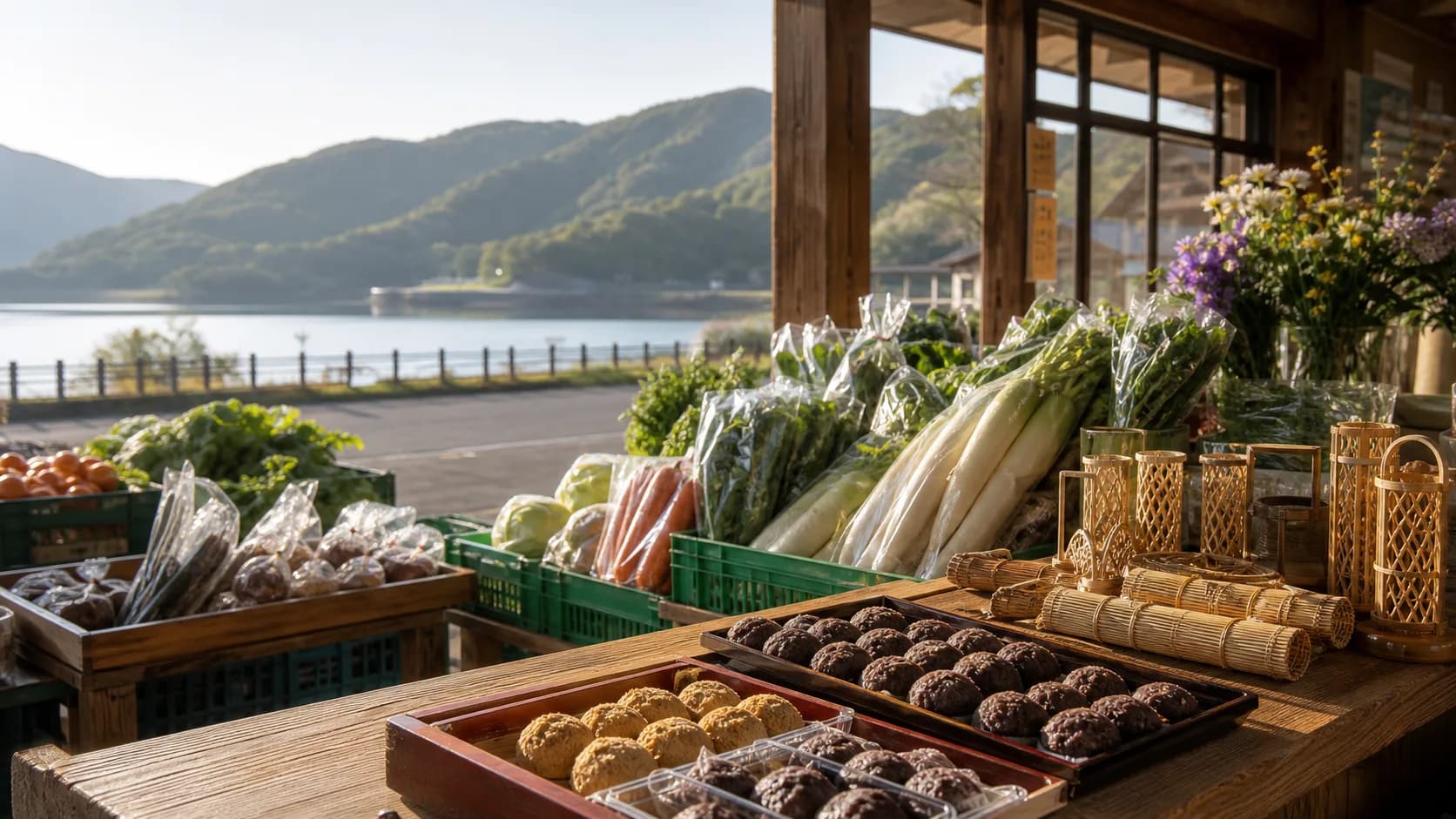
Vegetables from the open-air market and sweets from the product hall

This small station's shops run from morning until about 16:00. Ohagi, chirashi sushi, vegetables, and flowers are easier to choose from earlier in the day.

If you want to eat
Hoshigoe no Sato or Cafe Sakurako

The light-meal shop serving black pork dishes and the cafe are generally closed Tuesdays. Plan for a visit limited to the product hall if they are unavailable.

For culture
Ohenro Exchange Salon

Just beside the station. Pair a short salon visit with shopping to learn why Maeyama is a rest stop before the final pilgrimage temple.

For a seasonal stop
Maeyama Dam lakeside

Spring cherry blossoms and autumn foliage change the scene. At peak bloom, allow extra room for parking and people walking nearby.

For the pilgrimage route
From Nagaoji to Okuboji

Whether driving or walking, use this stop between Temples 87 and 88 as a clear point of orientation.

Illustrative image — not an on-site photograph
Ayano's shopping notes

Take home a taste of Maeyama through morning produce and ohagi, rather than spectacle.

Ayano Okumura sees this as a small rest stop where Maeyama's everyday foods meet the road to the pilgrimage's final temple, rather than a major dining destination. Browse the ohagi, vegetables, flowers, and bamboo crafts; except on Tuesdays, consider a light meal. If time allows, add the Ohenro Exchange Salon and Maeyama Dam to make even a short visit feel local.

Highlights

Michi-no-Eki Nagao sits on Prefectural Route 3 in Maeyama, Sanuki City, between Nagaoji, Temple 87, and Okuboji, Temple 88, on the Shikoku pilgrimage. The product hall and open-air market generally operate from 8:00 to 16:00. Stop briefly for local vegetables, rice, miso, kinzanji miso, bamboo crafts, ohagi (sweet rice cakes), chirashi sushi (topped sushi rice), and flowers. This is a small stop rather than a large dining complex. The neighboring Ohenro Exchange Salon, spring cherry blossoms and autumn leaves at Maeyama Dam, and light meals generally available except Tuesdays make it a worthwhile stop on an eastern Kagawa drive.

  • #Maeyama Dam
  • #Ohenro Exchange Salon
  • #Open-air market
  • #Ohagi sweet rice cakes
  • #Bamboo crafts
  • #Road to the final pilgrimage temple
Why I like it

Reasons to stop here

01

Shop for local produce and sweets in the morning at Maeyama's small product hall

The station's main attractions are the open-air market, centered on locally grown vegetables, and the product hall. Alongside vegetables, rice, miso, kinzanji miso, bamboo crafts, and flowers, you may find easy takeaway foods such as ohagi sweet rice cakes and chirashi sushi. Come between morning and early afternoon to see what you would like to take home, rather than planning the stop around a sit-down meal alone.

02

The road to pilgrimage completion is clear even for first-time visitors

Across from the roadside station are the Ohenro Exchange Salon and a pilgrimage materials exhibition room. This stop lies between Nagaoji, Temple 87, and Okuboji, Temple 88, the final temple of the Shikoku pilgrimage. Even a short break, a look at local information, or a visit to the exhibits gives you a reason to pause in Maeyama.

03

Cherry blossoms and autumn leaves change the scene at Maeyama Dam

Maeyama Dam lies to the north. Cherry blossoms around the station and along the dam in spring, and autumn colors by the lake, change the feel of a visit. The station is usually a short rest stop, but in blossom or foliage season, leave time for a brief lakeside walk before or after shopping.

Route idea

Ways to plan your stop

Spend your time at the station or add somewhere nearby. These ideas help you plan around your companions and the weather.

A 30–45-minute shopping break

Shop at the morning market and take a quick look at Maeyama Dam

From about 8:00, browse the product hall and open-air market for vegetables, flowers, ohagi, and chirashi sushi. The station itself is small; even a quick look toward Maeyama Dam after shopping makes this a distinctly Maeyama break.

Parking → restrooms → open-air market → product hall → brief look at the Maeyama Dam lakeside

Stock may thin out toward evening. If you want sweets or takeaway food, visit earlier in the day.

An adult cultural stop or a short rainy-day visit

Learn about the road to the final temple at the Ohenro Exchange Salon

After resting at the roadside station, head to the nearby Ohenro Exchange Salon. See its exhibition room before continuing toward Okuboji. Maeyama then becomes more than a pass-through point between Temples 87 and 88.

Product hall → Ohenro Exchange Salon → depart toward Okuboji

The salon is generally open 8:00–16:00 and closed over the New Year holidays. Allow enough time before closing if the exhibits are your main purpose.

A day driving to Nagaoji, Okuboji, or the Monnyu area

Build an eastern Kagawa drive around a light lunch

Except on Tuesdays, consider the Sanuki Yume Buta black pork dishes at Hoshigoe no Sato or Cafe Sakurako for lunch. Dining options are limited, so the station works best as a light stop that may also include sweets or takeaway food from the product hall.

Nagaoji → lunch break at Michi-no-Eki Nagao → Maeyama Dam or Okuboji → return trip

The light-meal shop is generally closed Tuesdays. Keep the direct-sale goods and sweets in mind rather than relying on one dining option.

Seasonal photos and a short walk for couples or friends

Add a lakeside stroll during spring blossoms or autumn colors

The Maeyama Dam area has many cherry trees and draws visitors together with the roadside station and pilgrimage museum. Autumn foliage is another draw. Shopping, a lakeside look, and the exchange salon make a manageable seasonal outing.

Roadside station → Maeyama Dam area → Ohenro Exchange Salon → Monnyu no Sato or Okuboji

Cherry blossom timing depends on the weather. At peak bloom, do not occupy a parking space longer than needed, and wear comfortable walking shoes.

Hours

Opening hours

Product hall
8:00-16:00

Closed over the New Year holidays. Includes a rest area, information corner, exhibition and sales area, and open-air market.

Open-air market
8:00-16:00

Mainly locally grown vegetables; selection changes with weather and deliveries. Listed hours are approximate.

Hoshigoe no Sato Sanuki Yume Buta
11:00-16:00

Generally closed Tuesdays; a light-meal option serving black pork dishes.

Cafe Sakurako
9:00-16:00

Generally closed Tuesdays; a cafe stop to pair with Maeyama Dam or the exchange salon.

Ohenro Exchange Salon
8:00-16:00

Closed over the New Year holidays; free entry. Includes a pilgrimage materials exhibition room.

Parking, restrooms, and telephone
24 hours

About 62 standard spaces, 4 large-vehicle spaces, and 2 accessible spaces.

Rapid EV charging
24 hours

The Shikoku roadside station portal lists an approximate fee of ¥450–500 per 30 minutes.

Roadside station stamp
8:00-16:00

Usually at the office counter inside the rest room. Collectible stamps are a common souvenir of visits to Japan's roadside stations.

Family

Visiting with children

Illustrative image — not an on-site photograph

Stars show the editorial recommendation for each age group on a five-point scale. Read the reasons alongside each rating.

Under 1 year
★★★☆☆

Suitable for a restroom break and quick shopping; harder to build a long stay around.

The product hall is close to parking, making a short break easy, but this is not a destination built around a nursing room or indoor play area. Leave enough time before dining and exhibits close.

Ages 2–3
★★★☆☆

Good for a quick look at vegetables and flowers; go elsewhere for more active play.

Goods are within children's reach at the open-air market, so watch their hands. For play, a short Maeyama Dam lakeside walk or a trip to Monnyu no Sato is a more natural choice.

Ages 4–6
★★★★☆

Ohagi, flowers, the dam lake, and exhibits offer small points of interest.

Maps and exhibits at the Ohenro Exchange Salon can help explain the trip from Nagaoji to Okuboji. Do not count on this as a place for running around.

Elementary school age
★★★★☆

Pilgrimage culture, the dam, and cherry blossom season can become learning opportunities.

Combine Nagaoji, Okuboji, and Maeyama Dam to connect the area's geography and history. In summer, plan for shade and water; in spring and autumn, watch for crowds.

Event

Make an event part of your visit

Permanent spaces and dated events are listed separately. Events can change both the atmosphere and crowds; use the official links for details.

Checking event dates.

Spaces used for events

Cherry blossoms around Maeyama Dam

Cherry blossoms along Maeyama Dam and around the station are usually a highlight from late March to early April. Viewing information was published for 2026, but flowering varies with the weather; check the tourism association shortly before visiting.

Let's Eat Spring

An event around Monnyu no Sato was announced for April 5, 2026, with wild-plant picking, wild-plant tempura udon, a bazaar, and mochi pounding. It requires a drive from the station but fits a spring outing in Maeyama. This date has passed; check for a new announcement before planning a visit.

Maeyama de Marché

A marché was announced for April 5–6, 2026, around neighboring Hoshigoe no Sato. It offered a way to pair spring blossoms with local produce. Those dates have passed; check for a new announcement before planning a visit.

Sanuki Bar: Nagaoji Edition

Events featuring bamboo lanterns have been announced around Nagaoji in recent years. Dates vary by year; treat this as a possible autumn evening outing and check the tourism association's latest announcement.

Local feel

Reasons to return

Practical ideas and things to consider when spending time here.

A small station can make a satisfying short stop

Travel sites and reviews suggest visits under an hour and generally modest crowds. Think of this as a small stop combining direct sales, sweets, restrooms, and the Ohenro Exchange Salon rather than a large complex.

Keep several meal options in mind

The Shikoku roadside station portal lists Hoshigoe no Sato Sanuki Yume Buta at 11:00–16:00 and Cafe Sakurako at 9:00–16:00, with both generally closed Tuesdays. It is easier to plan around sweets and takeaway food from the product hall as well as a possible meal.

The Ohenro Exchange Salon adds to the station's character

Across from the station, the salon is listed as free to enter and open 8:00–16:00, with a pilgrimage materials exhibition room. Reviews also describe its place on the pilgrimage route. If this is your first visit, add the salon to a shopping stop to understand why the station is here.

Plan the route around Nagaoji, Okuboji, and Maeyama Dam

The station lies on the Shido–Yamakawa Prefectural Road, which connects National Route 11, the Sanuki East Highway, and National Route 377. It is between Nagaoji and Okuboji and reachable by car from Shido Interchange, so it makes a natural break between the town-center temple and the mountain-side temple.

Usually quieter than a large station, but blossom and event days differ

This is normally a calm, small roadside station. Cherry blossoms at Maeyama Dam, spring countryside events, and markets next door change parking and pedestrian activity. On event days, leave some flexibility between shopping, dining, and a lakeside walk.

Before your visit

Things to check before setting out

Opening and closure days, individual businesses and facilities for children or dogs can affect your plans.

  • The product hall is generally open 8:00–16:00 and closed over the New Year holidays. For shopping, come earlier in the day.
  • Parking, restrooms, and a telephone are listed as available 24 hours. At night, plan on a rest stop rather than using the shops.
  • Hoshigoe no Sato Sanuki Yume Buta and Cafe Sakurako are generally closed Tuesdays. Plan around direct sales and the exchange salon on Tuesdays.
  • The Ohenro Exchange Salon is generally open 8:00–16:00, free to enter, and closed over the New Year holidays.
  • Cherry blossom timing at Maeyama Dam changes with the weather. At peak bloom, allow extra time for parking and people walking along the road.
  • For a trip toward the mountains, account for weather, sunset, and driving time on mountain roads; leave enough time if going to Okuboji or the Monnyu area.
Food

Eating and shopping

Specialities, places to eat, sweets and bakeries can all give you a reason to stop. Check individual menus for current prices and availability.

  • Sweets
    Ohagi (sweet rice cakes)
    A product hall recommendation; check on site for sale days and sellouts.
  • Local specialty and processed product
    Kuwa powder (mulberry powder)
    A product hall recommendation.
  • Direct sales
    Locally grown vegetables and flowers
    At the open-air market and product hall, generally 8:00–16:00; hours are approximate.
  • Shopping
    Rice, miso, kinzanji miso, udon, and chirashi sushi
    Local processed foods and takeaway options. Kinzanji miso is a chunky, seasoned miso often eaten as a condiment; chirashi sushi is rice topped with assorted ingredients.
  • Light meals and dining
    Hoshigoe no Sato Sanuki Yume Buta
    Generally 11:00–16:00; usually closed Tuesdays.
  • Cafe
    Cafe Sakurako
    Generally 9:00–16:00; usually closed Tuesdays.
Food mood

What would you like to eat?

A meal, a sweet treat, market shopping or something to take away: choose a focus for the day instead of trying everything at once.

Illustrative image — not an on-site photograph
Morning shopping

Vegetables, flowers, and rice from the open-air market

For meals at home. At this small station, it can be more enjoyable to choose from the day's seasonal stock than to arrive with a fixed shopping list.

Sweets for the car

Ohagi sweet rice cakes and local confectionery

Take home a taste of Maeyama even without a restaurant meal. Look earlier in the morning in case items sell out.

Lunch option

Hoshigoe no Sato Sanuki Yume Buta

For black pork dishes after 11:00. Avoid its usual Tuesday closure; on busy days, switch to a light bite from the product hall.

Cafe break

Cafe Sakurako

A place to sit and rest while visiting Maeyama Dam or the exchange salon. Make another plan on Tuesdays.

Take home something local

Bamboo crafts, miso, kinzanji miso, and kuwa flour

In Ayano Okumura's view, this station is best for collecting a few everyday tastes and crafts of Maeyama rather than seeking one flashy signature souvenir.

Share

Send your travel companions a possible stop.

Send a correction

Let us know if information on this page, such as hours or closing days, is incorrect. Our editors will review your message before updating the guide.

We use your submission only to review and improve our content and to reply about your message.