Skip to content
Michi-no-Eki JournalMap
Illustrative image — not an on-site photograph

Toyama Prefecture · Hokuriku

Michi-no-Eki Taira

道の駅 たいら

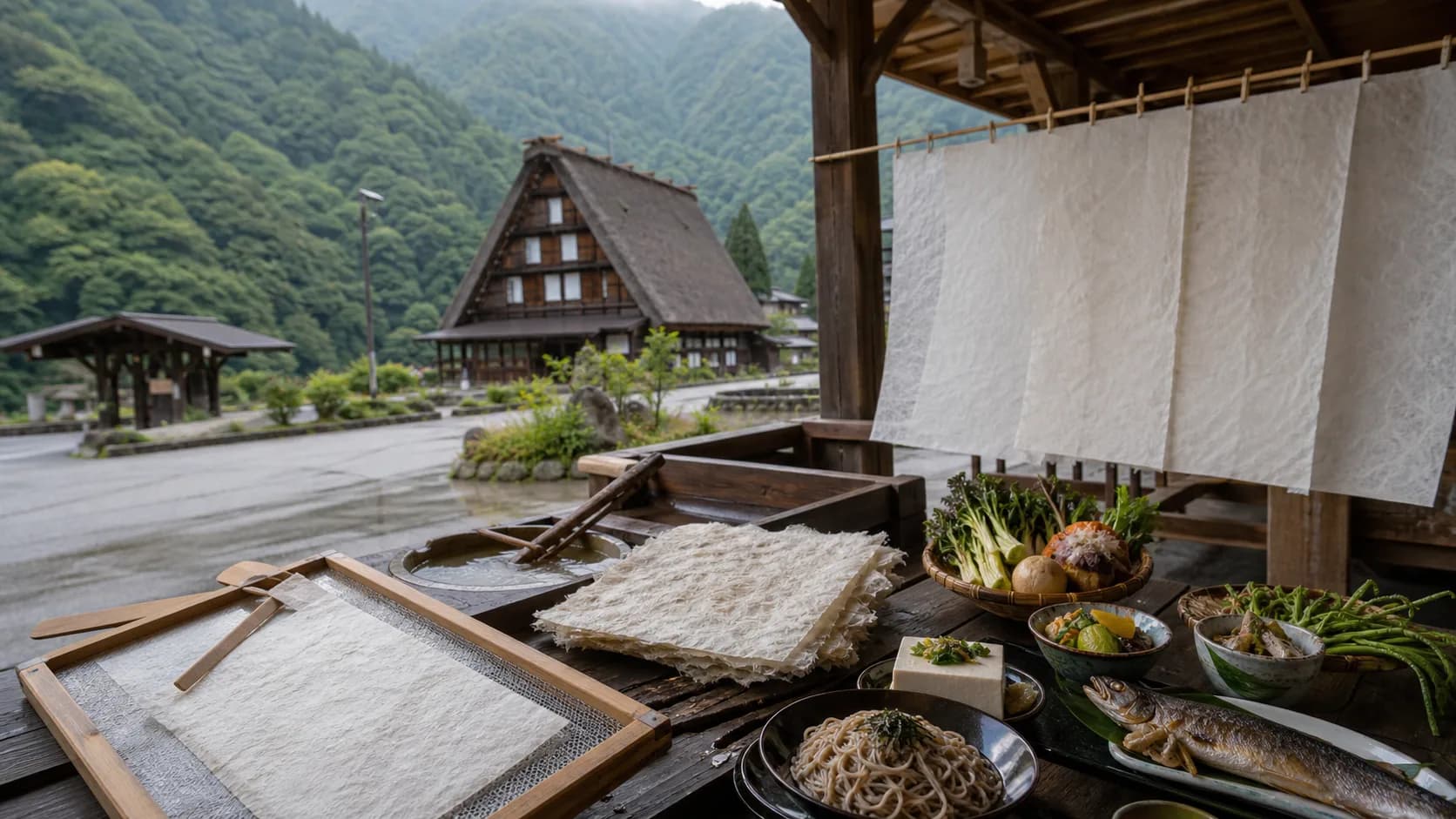
Handmade paper, Gokayama tofu, and char soba: stop for local crafts and mountain food before or after visiting the World Heritage villages.

Illustrative image — not an on-site photograph

Location
Nanto City
Road
National Route 156
Hours
9:00–17:00
Indicative hours for Gokayama Washi no Sato and the roadside station. Papermaking sessions run 10:00–15:00; the restaurant and local products shop have their own hours.
Parking
Cars: 50 / Large vehicles: 3
My stamp

Record this station in your journal

Records are saved in this browser. Visited stations receive a stamp and count towards your nationwide progress.

Nationwide progress
— / 1,238 stations
How to enjoy

Choose how to enjoy your visit

Eat, shop, play, take in the view or rest. Choose from the station’s strengths to suit your day.

Decide first
Whether to include a papermaking session

The session requires preparation and is listed as reservation-only. Deciding this first helps organize a rainy-day visit or a trip with children.

For a meal
Gokayama tofu, soba, char, and mountain vegetables

Furusato restaurant focuses on mountain foods. Arriving before the afternoon gives you more choices.

For shopping
Gokayama washi paper, tochi mochi, and folk crafts

Asaake local products shop brings together food gifts and handmade crafts.

If the weather is fine
Add either Ainokura or Suganuma

Check parking charges and admission hours for the World Heritage villages. Choosing one village makes for an easier visit.

In winter
Taira Ski Area and road conditions

During the snowy season, consider the ski area, onsen, or an indoor activity, and check the surfaces of National Route 156 and mountain roads first.

Illustrative image — not an on-site photograph
Akari Hinata's Gokayama notes

Decide on the activity first, and the family's day falls into place.

Taira is useful even if you are just passing by to shop for souvenirs. For a family visit, decide first whether to include papermaking, lunch, or just one gassho-style village. Choose washi in rain, a village in fine weather, and skiing or an onsen in winter. Seeing the play options, restrooms, food, and rainy-day alternatives in a practical order makes Gokayama's mountain roads feel more manageable.

Highlights

Michi-no-Eki Taira is a roadside station on National Route 156 integrated with Gokayama Washi no Sato, a center for traditional Japanese paper. For a short stop, browse local products and tourist information; around lunchtime, try Gokayama tofu or char soba. On a rainy day or with children, book an indoor papermaking session. In fine weather, continue to the gassho-style villages of Ainokura or Suganuma; in winter, consider Taira Ski Area or Kuroba Onsen. The station works especially well as a place to plan the order of a Gokayama visit.

  • #Gokayama Washi no Sato
  • #Papermaking experience
  • #Gokayama tofu
  • #Char soba
  • #Tochi mochi
  • #Ainokura Gassho-style Village
  • #Suganuma Gassho-style Village
  • #Taira Ski Area
  • #Kuroba Onsen
Why I like it

Reasons to stop here

01

Make a washi experience the center of the day

Michi-no-Eki Taira can be visited together with Gokayama Washi no Sato's Washi Craft Museum, Washi Experience Center, and Taira Local History Museum. Making a postcard is listed as taking about 20–30 minutes; a group session for up to 30 people is listed as about 60 minutes. Papermaking gives a rainy day a distinctly Gokayama activity when outdoor plans are difficult.

02

Mountain food and handmade goods close together

The restaurant offers mountain foods such as Gokayama tofu, soba, char, and mountain vegetables. At the local products shop, look for tochi mochi, seasonal ingredients, Gokayama washi paper, and folk crafts. Families can eat and shop in one short stop.

03

A useful stop before or after the World Heritage villages

You can continue from here to Ainokura or Suganuma Gassho-style Village, Murakami House, Kuroba Onsen, or Taira Ski Area. Beyond the distance from Gokayama Interchange, consider the weather, parking, and children's energy. Eating and using the restrooms at the station before choosing one further stop can make the day easier.

Route idea

Ways to plan your stop

Spend your time at the station or add somewhere nearby. These ideas help you plan around your companions and the weather.

Families with children, three-generation groups, and days when outdoor plans are uncertain

Make papermaking the main event on a rainy day

Check the activity's reservation availability in the morning, then visit the Washi Experience Center, Washi Craft Museum, local products shop, and restaurant in that order. You can experience Gokayama's traditional craft indoors without forcing a walk through a gassho-style village.

Michi-no-Eki Taira → papermaking → Washi Craft Museum → dining and shopping.

Papermaking is listed as reservation-only. In winter, the experience center may be used for preparing paper materials, so contact the facility in advance if the activity is your main purpose.

A first drive to Ainokura or Suganuma

Eat and use the restroom before visiting a World Heritage village

Stop on National Route 156 for food, restrooms, and tourist information before heading to Ainokura or Suganuma. With young children, walking one village carefully may be more memorable than rushing through both.

Michi-no-Eki Taira → Ainokura Gassho-style Village or Suganuma Gassho-style Village.

The gassho-style villages are also places where people live. Check parking charges, admission hours, and restrictions on visits after sunset.

A rest stop while traveling on National Route 156

Take a short break just for food and shopping

If there is no time for papermaking, browse Gokayama tofu, tochi mochi, small washi goods, and folk crafts, then choose soba or char at the restaurant. Even a short stop can include both mountain food and traditional crafts.

Parking → Asaake local products shop → Furusato restaurant → departure.

The restaurant is normally closed on Mondays and may also close temporarily or for private bookings. Check its latest official notice if lunch is your main reason for visiting.

A family drive during the snowy season

In winter, head for skiing or an onsen

In snowy weather, pairing the stop with Taira Ski Area or Kuroba Onsen lets you spend less time on outdoor village walks. Browse food and washi souvenirs briefly at the station, then continue according to road and weather conditions.

Michi-no-Eki Taira → Taira Ski Area or Kuroba Onsen.

Snow changes road conditions in Gokayama. Check the ski area's operations, live cameras, and national road conditions, and avoid pushing on when conditions are poor.

Hours

Opening hours

Gokayama Washi no Sato and the roadside station
9:00〜17:00

Closed over the New Year holiday. Michi-no-Eki Taira's phone number is 0763-66-2403.

Papermaking experience
10:00〜15:00

Reservation required. Making a postcard takes about 20–30 minutes; a group session for up to 30 people is listed as about 60 minutes. The fee is ¥1,000 per person. From December through March, the experience center serves as a place to dry kozo, the paper mulberry used for washi; sessions take place in the workshop behind the shop.

Gokayama no Aji Furusato
10:00〜17:30

Normally closed on Mondays. Temporary closures and private bookings are possible.

Gokayama Tokusan Asaake
9:30〜17:00

Listed as open daily. Watch for temporary closures and changes in seasonal stock.

Taira Local History Museum
Check the facility's information

Irregular closing days and reservation requirements are listed.

Family

Visiting with children

Illustrative image — not an on-site photograph

Stars show the editorial recommendation for each age group on a five-point scale. Read the reasons alongside each rating.

Age 1 and under
★★★☆☆

Suitable for restrooms, brief shopping, and a meal break.

Papermaking is likely too much to make the main event at this age; plan for carrying your child and taking a short break. This is a useful stop before heading to a gassho-style village.

Ages 2–3
★★★☆☆

Suitable for an indoor break on a rainy day and a short meal or shopping stop.

An adult should accompany children in activities involving water. Avoid making the village walk too long, and use the restroom and have a snack at the station first.

Ages 4–6
★★★★☆

Papermaking can become a highlight of the trip.

A reservation for the activity makes this a strong stop. In rain, combine it with the craft museum; in fine weather, add just one of Ainokura or Suganuma.

Primary school children
★★★★★

Washi history, gassho-style houses, and skiing connect learning with play.

Combining papermaking, Taira Local History Museum, and Murakami House gives a view of local life. Taira Ski Area is another winter option.

Activity reservation

Papermaking is listed as reservation-only. With children, set the activity time first, then arrange the meal and village walk around it.

Rainy day

The Washi Craft Museum, Washi Experience Center, dining, and shopping provide a Gokayama experience even with little outdoor walking.

Winter travel

During the snowy season, check National Route 156, nearby roads, and ski area operations, and be ready to reduce the number of stops.

Event

Make an event part of your visit

Permanent spaces and dated events are listed separately. Events can change both the atmosphere and crowds; use the official links for details.

Checking event dates.

Spaces used for events

Gokayama Washi no Sato notices

Check weekly for special exhibitions, papermaking sessions, roadside station stamps, and temporary openings or closures. A station stamp is an ink stamp used to record a visit.

Washi Craft Museum and second-floor gallery

Paper-cutting exhibitions, solo shows, and chigiri-e torn-paper collage events provide indoor stops for the itinerary.

Furusato restaurant and Asaake local products shop

Check the restaurant's closing days and private bookings, and availability of seasonal items, tochi mochi, and mountain vegetables when food is a priority.

Gokayama tourism, Ainokura, and Suganuma

Illuminations, preservation contributions, parking, and restrictions after sunset can affect a day trip from the station.

Taira Ski Area

Check winter opening, live cameras, events, competitions, and snow conditions.

Local feel

Reasons to return

Practical ideas and things to consider when spending time here.

Papermaking is especially valuable on rainy days

Gokayama's gassho-style villages and mountain scenery are tempting, but rain, heat, or snow can shorten an outdoor walk. A reserved papermaking session can become the main activity and give children a lasting memory of the trip.

The local products shop combines food and folk crafts

Asaake is described as stocking seasonal ingredients, familiar local products, and Gokayama folk crafts. Even on a short stop, choosing tochi mochi and a small washi item gives you a taste of what makes the station distinctive.

Check parking and preservation contributions by location

Parking at the station is free, while the gassho-style villages of Ainokura and Suganuma have information about preservation contributions and admission hours. Check the conditions for each next stop separately.

Before your visit

Things to check before setting out

Opening and closure days, individual businesses and facilities for children or dogs can affect your plans.

  • Papermaking sessions are listed as 10:00–15:00 and require reservations. If this is your main activity, call ahead to settle a time.
  • Gokayama Washi no Sato and the roadside station are generally listed as 9:00–17:00. They close over the New Year holiday; check each facility's separate closures.
  • Furusato restaurant is listed as 10:00–17:30 and normally closed on Mondays, with possible temporary closures and private bookings. Check recent notices if going for lunch.
  • Asaake local products shop is listed as 9:30–17:00 and open daily, though temporary closures can occur. Seasonal goods depend on stock.
  • For Ainokura or Suganuma, check preservation contributions, parking, admission hours, and restrictions after sunset for the particular village.
  • In winter, check Taira Ski Area's operations, live cameras, and the surface of National Route 156; a shorter village walk may be sensible.
Food

Eating and shopping

Specialities, places to eat, sweets and bakeries can all give you a reason to stop. Check individual menus for current prices and availability.

  • Local dish
    Gokayama tofu
    A Gokayama staple to try as a meal or buy as a souvenir; availability depends on the shop.
  • Restaurant
    Char soba
    A mountain dish to look for at Furusato restaurant: soba noodles served with char. Visit around lunchtime for the best chance of finding it.
  • Souvenir and sweet
    Tochi mochi
    A seasonal souvenir, particularly in winter: mochi made with Japanese horse chestnuts. Availability depends on stock.
  • Local products
    Mountain vegetables and seasonal ingredients
    In spring, look for mountain vegetables; in winter, preserved foods and mochi sweets change the shop's selection.
  • Crafts
    Small Gokayama washi goods
    For a nonfood souvenir, start with Japanese paper products and folk crafts.
Food mood

What would you like to eat?

A meal, a sweet treat, market shopping or something to take away: choose a focus for the day instead of trying everything at once.

Illustrative image — not an on-site photograph
Lunch

Gokayama tofu, char soba, and mountain vegetable dishes

For a day when you want mountain food before or after walking a gassho-style village. Allow time for the family to sit down at the restaurant.

Furusato restaurant is normally closed on Mondays and may close temporarily or for private bookings.

Small souvenirs

Tochi mochi, seasonal ingredients, and folk crafts

For taking a little piece of Gokayama home during a short stop. Choose one food item and one craft item.

Handmade souvenirs

Gokayama washi, small paper goods, and chigiri-e collage supplies

For a souvenir beyond food. Visiting the Washi Craft Museum first helps explain the meaning of these Japanese paper products.

Split activities with children

Soba, tofu, sweets, and papermaking

During a wait for food or in rainy weather, divide the visit between activities and shopping. Primary school children may enjoy papermaking while adults browse the craft museum and souvenirs.

A fallback when busy

Shop first, gather tourist information, then visit one nearby place

If the restaurant's availability is uncertain, buy souvenirs and use the restroom first, leaving room in the schedule to switch to Ainokura, Suganuma, or Murakami House.

Share

Send your travel companions a possible stop.

Send a correction

Let us know if information on this page, such as hours or closing days, is incorrect. Our editors will review your message before updating the guide.

We use your submission only to review and improve our content and to reply about your message.