Skip to content
Michi-no-Eki JournalMap
Illustrative image — not an on-site photograph

Mie · Chubu

Michi-no-Eki Kumano–Hana no Iwaya

道の駅 熊野・花の窟

A small roadside station for visiting Hana no Iwaya, tasting snacks made with ancient rice and feeling the sea breeze at Shichiri Mihama.

Illustrative image — not an on-site photograph

Location
Kumano City
Road
National Route 42
Hours
10:00–16:00
Approximately 10:00–16:00; closing can change with the season. The dining area is approximately 11:00–14:00. Check current hours before a late visit.
Parking
Cars: 43 / Large vehicles: 6
My stamp

Record this station in your journal

Records are saved in this browser. Visited stations receive a stamp and count towards your nationwide progress.

Nationwide progress
— / 1,238 stations
How to enjoy

Choose how to enjoy your visit

Eat, shop, play, take in the view or rest. Choose from the station’s strengths to suit your day.

Sort out first
Parking, toilets and time for the shrine

Use the toilet with young children and decide how long to stay before heading to the shrine.

For a meal
Ancient-rice udon and local sushi

Dining is centered on lunchtime. Later, switch to sweets or souvenirs.

To buy
Otsuna mochi, citrus fruit and processed Kumano foods

Souvenirs that travel well in the car make it easier to continue to a seaside walk.

If it is sunny
Shichiri Mihama and Shishi-iwa

Check the waves and wind; keep children away from the water's edge.

If it rains
A short stop at the teahouse and exhibit

Skip Onigajo's rocky paths and beach walks if conditions are poor, and rest under cover.

On festival days
Plan separately for February 2 and October 2

On the days of the rope-hanging rite, allow extra time for traffic and crowds.

Illustrative image — not an on-site photograph
Minato's stopover notes

A station to set the family's pace, rather than a place to play.

Minato Takano sees this as a place to get the family in step before entering Hana no Iwaya Shrine, rather than a large roadside station. First the toilets, then the shrine, followed by an ancient-rice snack if the dining area is open; when children want to move, continue to Shichiri Mihama or Shishi-iwa. In rain, keep it short with the teahouse and exhibit. A modest plan lets Kumano's rocks and sea leave the strongest impression.

Highlights

Michi-no-Eki Kumano–Hana no Iwaya centers on Otsuna Chaya, directly opposite the World Heritage site Hana no Iwaya Shrine. It is better suited to a short stop than a long play session with large equipment or an extensive shopping area. Use the toilets before or after a shrine visit, try a light serving of udon, rice balls or dumplings made with ancient rice, or local mehari-zushi and sanma-zushi, then continue to Shichiri Mihama Beach or Shishi-iwa. With children, keep the meal brief and the shrine visit quiet; add the shore or Onigajo only if the weather and footing allow.

  • #Hana no Iwaya Shrine
  • #Otsuna Chaya
  • #Ancient rice
  • #Mehari-zushi
  • #Sanma-zushi
  • #Shichiri Mihama
  • #National Route 42
Why I like it

Reasons to stop here

01

The shrine and rest stop are close together

Directly opposite Hana no Iwaya Shrine, parking, toilets, a light meal, souvenirs and an information exhibit fit into one stop. Families with children or grandparents can rest before a longer walk.

02

Ancient-rice snacks give this stop its character

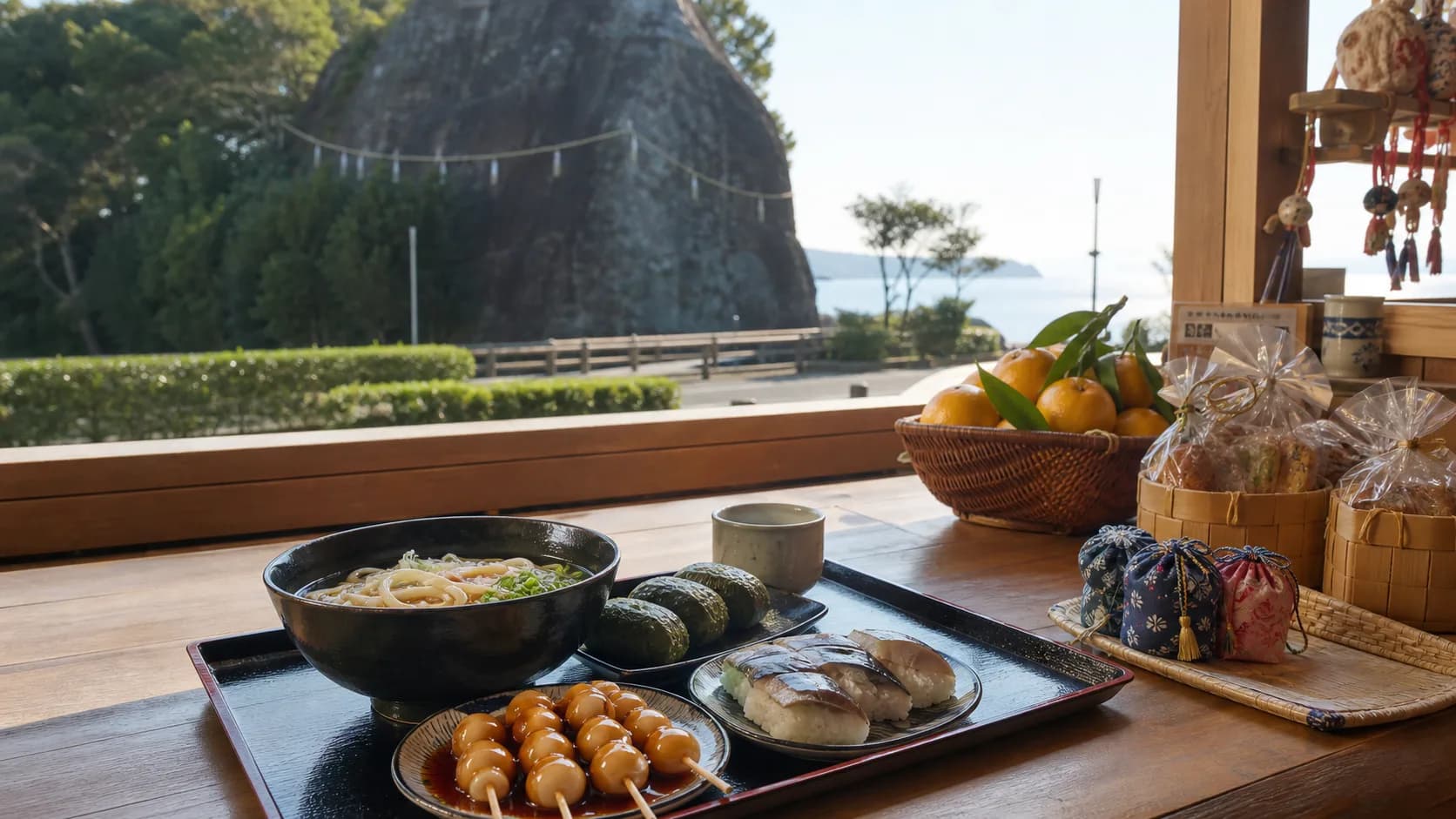
At Otsuna Chaya, options include udon and rice balls made with Izanami ancient rice, mitarashi dumplings, Otsuna mochi, mehari-zushi and sanma-zushi. Even without a large lunch, a small plate offers a taste of Kumano.

03

Continue along the coast to Shichiri Mihama and Shishi-iwa

A short walk or drive onward to the beach and Shishi-iwa links the rock, shrine and sea landscapes. On windy days or when waves are high, stay back from the shore and keep the visit to the teahouse and shrine.

04

The rope-hanging rite changes the atmosphere on February 2 and October 2

Hana no Iwaya Shrine's major festivals take place every February 2 and October 2. Movement on National Route 42 and nearby changes too, so plan a festival visit separately from a quiet shrine visit.

Route idea

Ways to plan your stop

Spend your time at the station or add somewhere nearby. These ideas help you plan around your companions and the weather.

A short break on National Route 42

Visit the shrine and have a snack in 30–45 minutes

After parking, use the toilet first and check dining hours at Otsuna Chaya. Visit the shrine quietly, then return for an ancient-rice dumpling or a souvenir; this sequence also helps young children stay engaged.

Parking → toilets → Hana no Iwaya Shrine → Otsuna Chaya → departure

At the shrine, respect the rocky sacred setting. It is more comfortable for everyone if children do not treat it as a place to run and play.

A lunch break before or after entering central Kumano

Have lunch at Otsuna Chaya

If you arrive during the dining area's approximate 11:00–14:00 hours, consider ancient-rice udon, Izanami rice balls, mehari-zushi and sanma-zushi. A light meal leaves room for a short visit to Shichiri Mihama or Shishi-iwa afterward.

Lunch at Otsuna Chaya → local products shop → Shichiri Mihama or Shishi-iwa

Dining hours and selection change. If a particular lunch item is unavailable, sweets and souvenirs are alternatives.

A family drive with children aged 2–6

Separate a quiet shrine visit from seaside activity with children

Use the toilets, snacks and exhibit briefly at the station, then give children room to move near Shichiri Mihama or Shishi-iwa. Keep back from the surf, and at Onigajo walk only where the footing suits their age.

Station → Hana no Iwaya Shrine → Otsuna Chaya → Shichiri Mihama

This station has no large play equipment. In rain or strong winds, ending at the teahouse is a practical choice.

Adults or coastal sightseeing with primary-school-age children and older

Link the World Heritage rock and sea in half a day

See the huge rock at Hana no Iwaya Shrine, then continue to Shishi-iwa and Onigajo for an increasingly expansive view of Kumano's rocks and sea. Use Otsuna Chaya for food and shopping between stops, and choose walking areas according to the weather.

Station and Hana no Iwaya Shrine → Shishi-iwa → Onigajo → central Kumano

Waves, wind and footing change the experience on Onigajo's coastal path. In sandals, or when carrying a child throughout, it is safer to avoid pushing farther along the path.

A visit focused on the festival

See the February or October rope-hanging rite

On major festival days, use the station as a landmark for food, toilets and meeting up before or after the rite. If aiming for the activity around 10:00 a.m., plan parking and travel on National Route 42 differently from an ordinary day.

Arrive in the area early → visit the shrine and watch the rite → rest at Otsuna Chaya

The dates recur annually, but check last-minute information on traffic controls, crowds and weather arrangements.

Hours

Opening hours

Otsuna Chaya
10:00〜16:00

Times are approximate and closing may change with the season; check current information before a late visit.

Dining area
Approximately 11:00–14:00

Ancient-rice udon, local sushi and other items. Check the counter for sellouts or temporary changes.

Hana no Iwaya Shrine
Worship generally possible throughout the day

Follow local guidance during major festivals or severe weather.

Nearby coast and rocky shore
Weather dependent

Avoid pushing ahead in high waves, strong wind, rain or after dark.

Family

Visiting with children

Illustrative image — not an on-site photograph

Stars show the editorial recommendation for each age group on a five-point scale. Read the reasons alongside each rating.

Ages 1 and under
★★★☆☆

Useful for toilets and a short rest.

Keep the shrine and teahouse stops brief. If adding the beach or Onigajo, consider carrying the child and the strength of the wind.

Ages 2–3
★★★☆☆

Best for a short sequence of food, sweets and the exhibit.

This is not a station with large play equipment. Keep quiet at the shrine; if children need to move, head toward Shichiri Mihama where you can watch them closely.

Ages 4–6
★★★★☆

Stories of the rock, rope and sea can make the visit memorable.

A short explanation of the rope-hanging rite and the Nihon Shoki, an early Japanese chronicle, can hold their interest. At Onigajo, walk only where the footing suits them; in rain or strong wind, finish at the teahouse.

Primary-school-age children
★★★★☆

Easy to connect Hana no Iwaya, Shishi-iwa and Onigajo through landforms and history.

A half-day route brings together Kumano's World Heritage sites and coastal landforms. Plan ahead for summer heat and for crowds on fireworks or festival days.

Event

Make an event part of your visit

Permanent spaces and dated events are listed separately. Events can change both the atmosphere and crowds; use the official links for details.

Checking event dates.

Spaces used for events

Hana no Iwaya Shrine major festivals

The rope-hanging rite is held every February 2 and October 2, changing the usual flow of people on National Route 42 and nearby.

Kumano Grand Fireworks Festival

The 2026 event was scheduled for around 19:00 on August 17. Make separate plans well ahead for traffic, parking and accommodation around Shichiri Mihama.

The changing view of Shishi-iwa

The appearance of the sun and moon beside the rock changes with the season, including early mornings for about a month from mid-May and evenings in November–December.

Onigajo coastal walking path

Weather and waves affect how easy the path is to walk. In rain or strong wind, a short visit centered on the station and shrine may work better.

Local feel

Reasons to return

Practical ideas and things to consider when spending time here.

A short 30–60-minute stay is often the main pattern

Visitor accounts often describe combining parking and a rest with a visit to Hana no Iwaya Shrine. Breaking the stop into shrine, teahouse and shore can be more satisfying than trying to spend a long time at the station alone.

Ancient-rice dishes and local sushi stand out

Official, tourism and dining accounts often mention Izanami rice udon or rice balls, mehari-zushi, sanma-zushi and mitarashi dumplings. If you miss dining hours, sweets or souvenirs help keep the plan flexible.

Parking counts differ between listings

The Ministry of Land, Otsuna Chaya's official page and Kanko Mie list different numbers of car and bus spaces. Treat posted capacity as approximate, and plan differently for festival and fireworks days.

With children, a quiet shrine visit and meal matter more than play equipment

Because the station is next to the shrine, expectations of a place to run around may not fit. Toilets, a brief shrine visit, dumplings or udon, and the shore work better as separate steps for small children.

In rain or strong wind, skip Onigajo and beach walks

The nearby coastal rocks are appealing, but waves, wind and footing change the effort required. In poor weather, stop after Otsuna Chaya, the exhibit and a brief visit to Hana no Iwaya Shrine.

Plan festival and fireworks days separately from an ordinary stop

The rope-hanging rite takes place every February 2 and October 2; the Kumano Grand Fireworks Festival was scheduled for August 17, 2026. Movement on National Route 42, around Shichiri Mihama and through central Kumano changes, so a rest stop on those days needs its own plan.

Before your visit

Things to check before setting out

Opening and closure days, individual businesses and facilities for children or dogs can affect your plans.

  • Otsuna Chaya is listed as open approximately 10:00–16:00, with seasonal changes to closing time. For a late arrival or a meal, check current information just before visiting.
  • The dining area is approximately 11:00–14:00. If you miss lunch, consider ancient-rice dumplings, Otsuna mochi, souvenirs or the information exhibit.
  • Parking counts vary between listings. Treat ordinary days and festival or fireworks days differently.
  • Hana no Iwaya Shrine is a place for quiet worship. If children want to move around, save that for Shichiri Mihama or another walk nearby.
  • Waves, wind and footing change the difficulty of Shichiri Mihama and Onigajo. In rain or strong wind, do not force a seaside stop.
  • For the February 2 and October 2 rope-hanging rites and the Kumano Grand Fireworks Festival around August 17, check traffic controls, crowds and parking separately.
Food

Eating and shopping

Specialities, places to eat, sweets and bakeries can all give you a reason to stop. Check individual menus for current prices and availability.

  • Meal
    Udon with ancient rice
    Dining area approximately 11:00–14:00
  • Snack
    Izanami rice balls
    Check current availability at the counter
  • Local dish
    Mehari-zushi
    May sell out; check availability
  • Kumano specialty
    Sanma-zushi
    Check current availability at the counter
  • Sweets and souvenirs
    Ancient-rice mitarashi dumplings and Otsuna mochi
    Varies by season and stock
Food mood

What would you like to eat?

A meal, a sweet treat, market shopping or something to take away: choose a focus for the day instead of trying everything at once.

Illustrative image — not an on-site photograph
For lunch

Ancient-rice udon, Izanami rice balls

A manageable lunch when you arrive during dining hours.

Add a taste of Kumano

Mehari-zushi, sanma-zushi

Options for a quick taste of local food while traveling along the coast.

Share with children

Ancient-rice mitarashi dumplings, Otsuna mochi

Good for a small treat after the shrine or while waiting for a meal.

Take home by car

Citrus fruit, mandarin juice, and processed foods such as Kumano chicken, dried fish and fish cakes

If walking on to the next sight, choose items that hold up well and are easy to manage in the car.

If it is crowded

Local products shop, information exhibit, nearby stroll

If the dining area is busy or closed, browse souvenirs and the exhibit before moving on to the shrine and shore.

Share

Send your travel companions a possible stop.

Send a correction

Let us know if information on this page, such as hours or closing days, is incorrect. Our editors will review your message before updating the guide.

We use your submission only to review and improve our content and to reply about your message.