Skip to content
Michi-no-Eki JournalMap
Illustrative image — not an on-site photograph

Shizuoka Prefecture · Chubu

Michi-no-Eki Tenryu Sozu Hanamomo no Sato

道の駅 天竜相津花桃の里

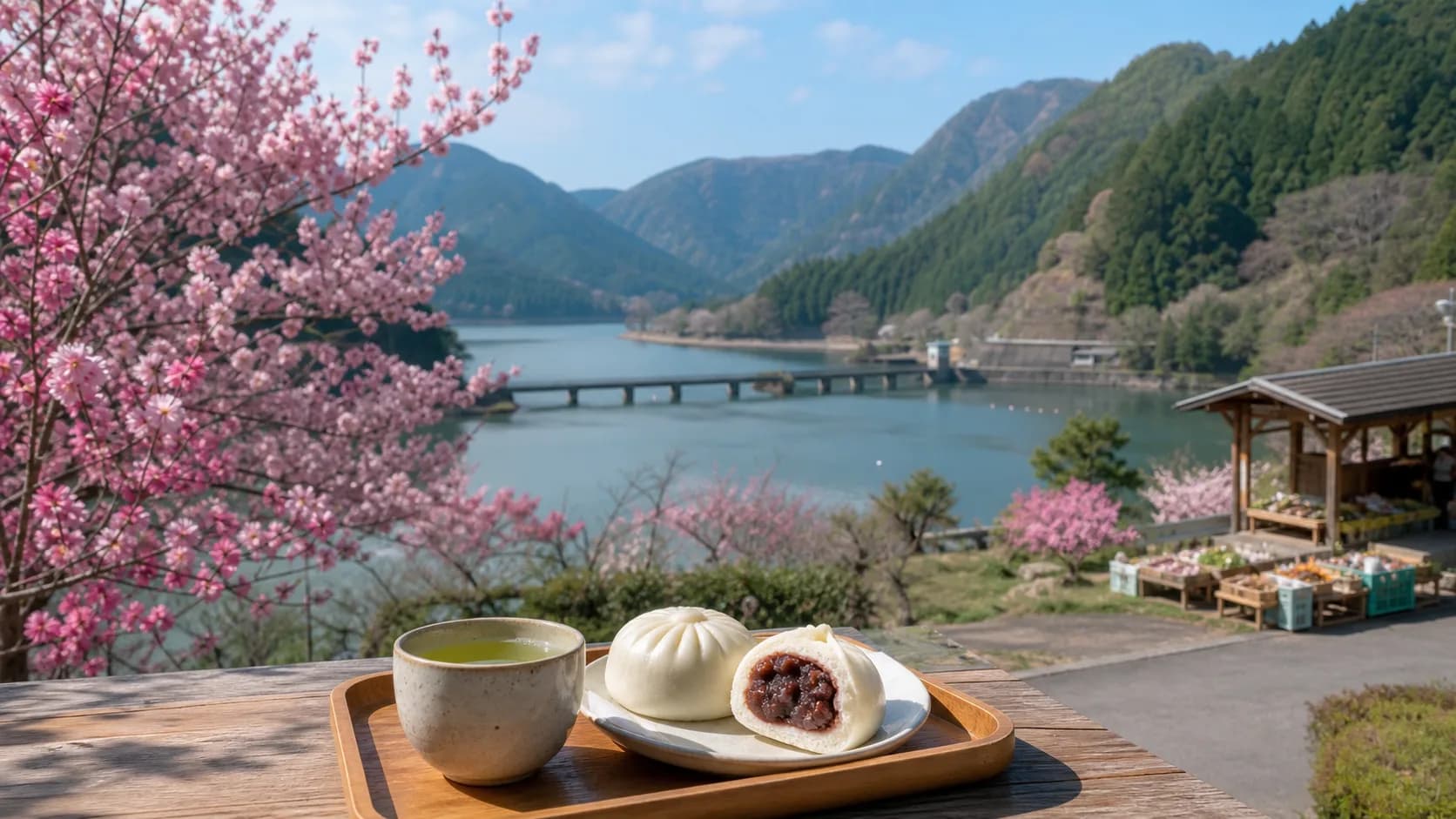
Flowering peach trees, wheat-flour manju buns and Tenryu tea: a small food stop on Route 152 where you can walk out to views of Funagira Dam Lake.

Illustrative image — not an on-site photograph

Location
Tenryu Ward, Hamamatsu City
Road
National Route 152
Hours
9:30–15:00
The shop is open until 15:00 on weekdays and about 15:30 on weekends and public holidays. The dining room opens at 11:00 and generally runs until 14:00 on weekdays or 14:30 on weekends and public holidays.
Parking
Cars: 48 / Large vehicles: 2
My stamp

Record this station in your journal

Records are saved in this browser. Visited stations receive a stamp and count towards your nationwide progress.

Nationwide progress
— / 1,238 stations
How to enjoy

Choose how to enjoy your visit

Eat, shop, play, take in the view or rest. Choose from the station’s strengths to suit your day.

Eat first
Wheat-flour manju buns and Tenryu tea

Even a short stop lets you take home the simple sweets this station is known for.

Stop for lunch
Hanamomo Curry, mountain-vegetable soba and weekday lunch specials

The dining room mainly serves a short lunch period. Allow some flexibility for seating and availability during the flowering season and on holidays.

Take a walk
Yume no Kakehashi Bridge and Funagira Dam Lake

A walk to the bridge after eating turns a roadside stop into a small lakeside outing.

Shop for
Tenryu tea, shiitake mushrooms, warabi mochi and seasonal mountain vegetables

The shop is small, making seasonal finds especially enjoyable.

Combine with
Akibasan, Futamata and the Soichiro Honda Craftsmanship Museum

The location works for either a short break or a half-day drive.

Illustrative image — not an on-site photograph
Highlights

Michi-no-Eki Tenryu Sozu Hanamomo no Sato is a lakeside roadside station on Route 152 as it heads into northern Enshu. Flowering peach and cherry trees draw visitors in spring. At other times, a walk to Yume no Kakehashi Bridge, Hanamomo Curry and mountain-vegetable soba in the dining room, handmade wheat-flour manju buns, Tenryu tea, shiitake mushrooms and seasonal warabi mochi (a soft bracken-starch sweet) are reasons to stop. This is a small station where eating, shopping and a lakeside walk are close together, making it a convenient break before or after Akibasan or Mizukubo.

  • #Flowering peach trees
  • #Wheat-flour manju buns
  • #Tenryu tea
  • #Yume no Kakehashi Bridge
  • #Funagira Dam Lake
  • #National Route 152
Why I like it

Reasons to stop here

01

A flowering-peach stop beyond spring

Flowering peach trees are a major draw in spring, while the lakeside quiet and handmade food are attractions throughout the year. Even outside flowering season, walking to Yume no Kakehashi Bridge and picking up wheat-flour manju buns and Tenryu tea make a rewarding detour at the entrance to northern Enshu.

02

The dining room and sweets make the stop worthwhile

Alongside Hanamomo Curry, mountain-vegetable soba and weekday lunches, there are wheat-flour manju, miso manju, seasonal flowering-peach manju and warabi mochi from early summer. People come for the homemade cooking of local women rather than a large food court.

03

Turn a Route 152 break into half a day

Yume no Kakehashi Bridge is accessible from behind the station. You can also link a stop here with Sozu Marina, the Soichiro Honda Craftsmanship Museum and the Upper Shrine of Akibasan Hongu Akiha Shrine. Lake scenery, local craftsmanship and a sacred mountain can all be part of the same outing.

Route idea

Ways to plan your stop

Spend your time at the station or add somewhere nearby. These ideas help you plan around your companions and the weather.

A short break on National Route 152

Sweets and the lakeside in 30 minutes

First check the local products shop for wheat-flour manju, miso manju and Tenryu tea. In good weather, walk a little way toward the entrance to Yume no Kakehashi Bridge to see Funagira Dam Lake, making the stop more than a toilet break.

Parking lot -> local products shop -> entrance to Yume no Kakehashi Bridge -> back to the car.

Manju and seasonal sweets depend on production quantities and time of day. If you arrive late, focus on shopping rather than dining.

Travel to or from Akibasan, Mizukubo or Sakuma

Make lunch the focus before heading into northern Enshu

Hanamomo Curry or mountain-vegetable soba makes a restful lunch before or after mountain roads. The official dining guide also suggests the station as a meal stop for visitors heading to Akiha Shrine, Shirakura Gorge or Sakuma Dam.

From the Hamamatsu-Hamakita IC area -> lunch at the roadside station -> Akibasan or Mizukubo.

Dining hours are short. At weekend lunchtime or during flowering season, leave time for the shop and a walk if a meal takes longer than expected.

A blossom-viewing drive in early to mid-March

Start in the morning during flowering-peach season

When flowering peach and cherry trees color the lakeside, the station becomes a destination in itself. Arrive in the morning, see the flowers, then visit the dining room or sweets counter to reduce the impact of waits for parking and seats.

Arrive in the morning -> flowering peach trees and Yume no Kakehashi Bridge -> local products shop -> early lunch.

Bloom dates vary each year. Check official or tourist information about the Hanamomo Festival, March opening days, crowding and parking before setting out.

Families with elementary-school-age children and adults on a half-day drive

Add Futamata and local craftsmanship

After lunch and shopping at the station, visit the Soichiro Honda Craftsmanship Museum in Futamata to see both Tenryu's landscape and its manufacturing heritage on the same day. This is a good extension when food and scenery alone would feel too brief.

Roadside station -> Yume no Kakehashi Bridge -> Soichiro Honda Craftsmanship Museum -> Futamata town.

The museum is generally closed on Mondays and Tuesdays, while the station is generally closed on Tuesdays. Check both schedules before planning the day.

Hours

Opening hours

Local products shop, weekdays
9:30–15:00

Listed on the official site. Weekend and public-holiday closing time is generally 15:30.

Dining room, weekdays
11:00–14:00

Weekend and public-holiday closing time is generally 14:30.

Regular closing day
Tuesday

Hours may change during flowering season, on public holidays or for special openings.

Family

Visiting with children

Stars show the editorial recommendation for each age group on a five-point scale. Read the reasons alongside each rating.

Age 1 and under
★★☆☆☆

A short stop is best, as tourist information does not list a nursing room.

Use the toilets and shop briefly; decide whether to stay longer based on the weather and what you have prepared in the car.

Ages 2–3
★★★☆☆

Sweets and a short walk can provide a change of pace.

Yume no Kakehashi Bridge is a waterside walk with a sense of height; hold hands and keep the walk short.

Ages 4–6
★★★★☆

Flowering peach trees, the lake, bridge and soft-serve ice cream provide plenty to talk about.

While waiting for food, you can look around the shop or enjoy the view outside.

Elementary-school age
★★★★☆

Easy to combine Yume no Kakehashi Bridge, the Soichiro Honda Craftsmanship Museum and Akibasan.

Flowers, the dam lake, the former Sakuma Line bridge and craftsmanship can form a theme for the day.

Nursing room

Hamamatsu tourist information says there is no nursing room. Prepare in the car when traveling with an infant.

Dining-room seating

Tatami-floor and group use have reservation conditions. Calling ahead is sensible on busy days.

Outdoor walking

The bridge and waterfront offer strong views, but skip the walk in rain, strong winds or heat if conditions are uncomfortable.

Event

Make an event part of your visit

Permanent spaces and dated events are listed separately. Events can change both the atmosphere and crowds; use the official links for details.

Checking event dates.

Spaces used for events

Hanamomo Festival

The area is usually lively around March when the flowering peach trees bloom. Bloom dates and festival dates vary each year.

Local products shop

The selection changes by season, with flowering-peach manju in spring, warabi mochi from early summer, and gohei mochi and ebi-imo taro in autumn and winter.

Yume no Kakehashi Bridge

The walking route looks different during blossom season, autumn foliage, fresh spring greenery and after rain.

Dining room and terrace seating

During blossom season and at weekend lunchtime, meal timing and seat availability have a strong effect on the visit.

Local feel

Reasons to return

Practical ideas and things to consider when spending time here.

During blossom season, leave flexibility for parking and lunch

Hamamatsu tourist information notes crowding from March to May, especially around midday. On a blossom-viewing day, it helps to be able to switch the order of dining, shopping and walking to the bridge.

Buy seasonal sweets when you find them

The official local-products page describes flowering-peach manju and warabi mochi as seasonal and limited in quantity. If you especially want them as gifts, look in the shop before eating.

Walking to Yume no Kakehashi Bridge changes the visit

Visitor reviews and tourist information often describe crossing Yume no Kakehashi Bridge from the station to view Funagira Dam Lake. Even five minutes outdoors can give a stronger sense of this place than shopping alone.

At a small station, lunchtime arrival matters

The dining room generally closes at 14:00 on weekdays and 14:30 on weekends and public holidays; the station does not remain open late into the afternoon. If arriving later, consider sweets, tea, shiitake and a lakeside walk instead of a meal.

Choose the dining room and shop in rain; walk to the bridge in fine weather

A Hamamatsu tourism article also mentions the quiet scenery on rainy days, but families with children or older companions can choose to skip the bridge. In fine weather, flowering peach trees, the lake and the bridge make an outdoor walk especially rewarding.

A useful food stop before or after heading north

The official dining guide mentions drivers and riders traveling toward Akiha Shrine, Shirakura Gorge and Sakuma Dam. Toilets, a meal, tea and snacks can all be handled before heading into the mountains.

Before your visit

Things to check before setting out

Opening and closure days, individual businesses and facilities for children or dogs can affect your plans.

  • The official site lists the shop from 9:30 and the dining room from 11:00. Some older information, including the Ministry of Land, Infrastructure, Transport and Tourism listing, gives different hours; check the official site when planning a meal.
  • Tuesday is the usual closing day. Announcements may list daily operation in March or during flowering season, so check the latest notice for a spring visit.
  • The parking area holds about 48 standard cars and two large vehicles. Arriving earlier is more comfortable at peak flowering time or at weekend lunchtime.
  • Hamamatsu tourist information lists no nursing room. With an infant, plan for care in the car, a short stop or another nearby facility.
  • Yume no Kakehashi Bridge is most rewarding in good weather. In rain, strong winds or heat, the dining room and shop can be enough.
  • Wheat-flour manju, flowering-peach manju and warabi mochi depend on the season and production quantity. Look in the shop first if you want a particular sweet.
Food

Eating and shopping

Specialities, places to eat, sweets and bakeries can all give you a reason to stop. Check individual menus for current prices and availability.

  • Dining room
    Hanamomo Curry
    Around ¥750 on the official menu
  • Dining room
    Mountain-vegetable soba and tempura soba
    Around ¥750–¥850 on the official menu
  • Handmade sweet
    Wheat-flour manju
    Around ¥135 each, or ¥700 for a box of five
  • Spring only
    Flowering-peach manju
    Around ¥480 for a pack of three
  • Sweet sold from early summer into early autumn
    Warabi mochi
    Seasonal product with limited quantities
  • Local products
    Tenryu tea and shiitake mushrooms
    Prices vary with shop stock and deliveries
Food mood

What would you like to eat?

A meal, a sweet treat, market shopping or something to take away: choose a focus for the day instead of trying everything at once.

Illustrative image — not an on-site photograph
Dining-room favorite

Hanamomo Curry

Make this mild curry, with simmered vegetables, the centerpiece of lunch. It is an approachable choice for children and people who dislike spicy food.

The dining room chiefly serves from 11:00 to early afternoon. Check the day's menu for what is available.

A light noodle meal

Mountain-vegetable soba; tempura soba or udon

Good for a lighter meal before or after driving the mountain roads of northern Enshu. Shiitake-flavored broth and mountain vegetables give it a local character.

Sweets for a short stop

Wheat-flour manju and miso manju

Take home a taste of the station's handmade food even without entering the dining room. These sweets are easy to buy separately for the car and as gifts.

Find the season's specialties

Flowering-peach manju, warabi mochi, gohei mochi and steamed ebi-imo taro

The shop changes with spring, early summer, and autumn and winter. Choose these items when you find them.

Seasonal products may sell out depending on the time of year, day of the week and production quantity.

Bring local flavors home

Tenryu tea, dried and fresh shiitake, mountain vegetables and honey

Bring a taste of northern Enshu to dinner or the following morning. Shop for products connected to mountain life rather than expecting a large souvenir hall.

Share

Send your travel companions a possible stop.

Send a correction

Let us know if information on this page, such as hours or closing days, is incorrect. Our editors will review your message before updating the guide.

We use your submission only to review and improve our content and to reply about your message.